
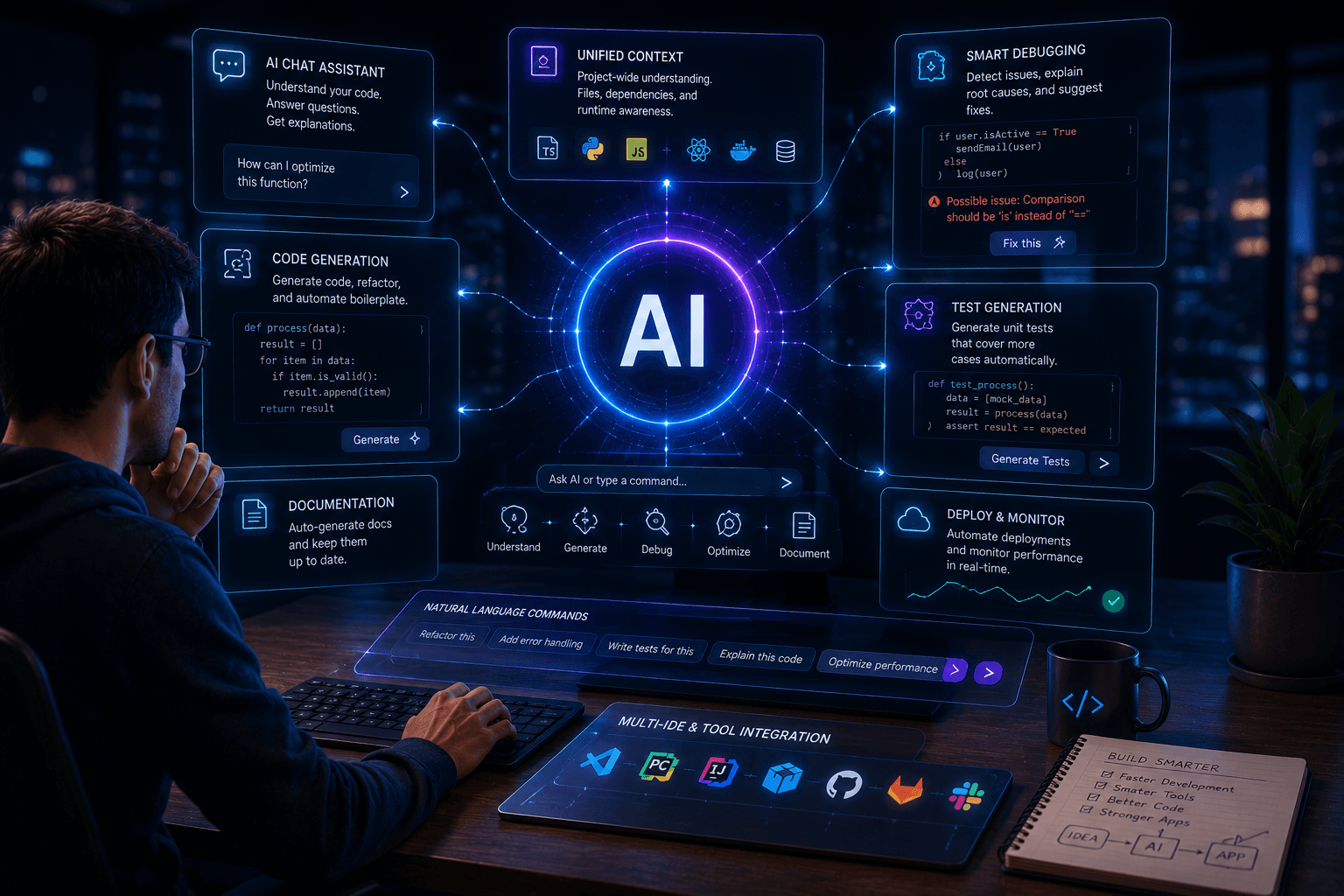

Introduction: The Promise of a Universal AI Interface
The world of software development is on the cusp of a profound transformation, driven by the increasing integration of artificial intelligence. At the heart of this revolution lies the concept of a Universal AI Interface. But what exactly is it? A Universal AI Interface refers to a standardized, consistent way for software applications to interact with various AI models, services, and platforms, regardless of their underlying architecture or origin. Currently, integrating AI into software often feels like navigating a labyrinth of disparate APIs, proprietary formats, and unique authentication methods. This fragmented landscape presents significant hurdles for developers, leading to increased complexity, higher costs, and slower innovation cycles. The promise of a universal interface is to cut through this complexity, offering a simplified development experience, making advanced AI capabilities more accessible to a broader range of developers and businesses, and ultimately, accelerating the pace of innovation across the entire software ecosystem. This new era for software development, powered by a unified approach to AI, is within our reach.
Quick Answer: A Universal AI Interface is a standardized method enabling software to communicate with diverse AI models and services seamlessly. It addresses the current fragmentation by offering common protocols and abstraction layers, thereby simplifying development, reducing costs, and fostering faster innovation. This unified approach makes advanced AI more accessible and interoperable for all.
Why We Need a Standardized AI Interface
- The challenges of integrating different AI models and APIs: Each AI service, whether it's a large language model, a machine learning platform, or a specialized AI tool, often comes with its own unique API, data schema, and authentication requirements. This necessitates writing custom integration code for each service, leading to duplicated effort and increased maintenance overhead.
- The cost and complexity of custom AI integrations: Developing and maintaining these custom integrations is time-consuming and expensive. It requires specialized expertise in both software development and the specific AI technologies being integrated, diverting resources from core product development.
- The limitations of vendor lock-in and lack of interoperability: Relying on proprietary AI solutions can lead to vendor lock-in, making it difficult and costly to switch providers or adopt new, potentially superior, AI models. A lack of interoperability stifles competition and limits the ability to combine different AI capabilities.
- The need for a common language for AI interaction: Just as standardized protocols like HTTP enabled the growth of the internet, a common language for AI interaction is crucial. This common language would allow developers to treat different AI services more interchangeably, focusing on the application logic rather than the intricacies of each AI's interface.
Key Components of a Universal AI Interface
- Standardized API protocols and data formats: Establishing common protocols (e.g., RESTful APIs, gRPC) and data formats (e.g., JSON, Protocol Buffers) for AI interactions is fundamental. This ensures that data can be exchanged consistently between applications and AI services.
- Abstraction layers for different AI models and services: A universal interface would include abstraction layers that hide the complexities of individual AI models and services. Developers could interact with a generic AI function (e.g., 'generate text', 'classify image') without needing to know the specifics of the underlying model (e.g., GPT-4, Claude, a custom CNN).
- Security and privacy considerations: Robust security measures, including authentication, authorization, and encryption, are paramount. The interface must also incorporate mechanisms to ensure data privacy and compliance with regulations like GDPR and CCPA, especially when handling sensitive user data.
- Scalability and performance requirements: The interface must be designed to handle a high volume of requests and scale efficiently to meet the demands of modern applications. Performance optimization is critical to ensure low latency and a responsive user experience when interacting with AI services.
Benefits for Software Developers
- Reduced development time and costs: By abstracting away the complexities of AI integration, developers can significantly cut down the time and resources required to build AI-powered features.
- Increased flexibility and agility: Developers can easily swap out different AI models or services without extensive code refactoring, allowing them to adapt quickly to new technologies and evolving business needs.
- Easier access to cutting-edge AI technologies: A standardized interface democratizes access to advanced AI capabilities, enabling smaller teams and individual developers to leverage powerful AI tools that were previously out of reach.
- Improved code reusability and maintainability: Common interfaces lead to more modular and reusable code. Maintenance becomes simpler as updates or changes to AI integrations are managed through the standardized layer.
- Faster prototyping and experimentation: The ease of integration encourages rapid prototyping and experimentation with different AI approaches, fostering a culture of innovation and allowing for quicker validation of ideas.
Use Cases and Applications
- AI-powered chatbots and virtual assistants: Creating sophisticated conversational agents that can understand user intent and provide relevant responses across various platforms.
- Intelligent automation and process optimization: Automating repetitive tasks, optimizing workflows, and improving operational efficiency in business processes.
- Predictive analytics and decision support systems: Leveraging AI to analyze data, forecast trends, and provide insights to aid in strategic decision-making.
- Computer vision and image recognition applications: Building systems that can interpret and understand visual information, used in everything from medical imaging to autonomous vehicles.
- Natural language processing and text analysis tools: Developing applications that can process, understand, and generate human language for tasks like sentiment analysis, content summarization, and translation.
Challenges and Considerations
- Ensuring security and privacy in a universal interface: As more data flows through a standardized interface, protecting it from breaches and ensuring compliance with privacy regulations becomes even more critical.
- Addressing ethical concerns and biases in AI models: A universal interface doesn't inherently solve the problem of bias in AI models. Careful consideration must be given to how ethical guidelines and bias mitigation strategies are incorporated.
- Managing complexity and maintaining performance: While aiming for standardization, the interface itself must be robust and efficient. Over-abstraction could lead to performance degradation, and managing numerous underlying AI services requires sophisticated orchestration.
- Promoting collaboration and standardization across the industry: Achieving a truly universal interface requires widespread industry adoption and collaboration among AI providers, software vendors, and developers. This involves overcoming competitive barriers and establishing common governance.
The Future of AI Integration
- The role of open-source initiatives and industry standards: Open standards and collaborative efforts are likely to drive the development and adoption of universal AI interfaces, ensuring broader accessibility and preventing monopolistic control.
- The impact of a universal AI interface on AI adoption: By lowering the barrier to entry and simplifying integration, a standardized interface will undoubtedly accelerate the adoption of AI across industries and applications of all sizes.
- The potential for new AI-powered applications and innovations: With easier access to AI capabilities, developers will be empowered to create novel applications and push the boundaries of what's possible, leading to unforeseen innovations.
- The evolution of software development practices: The widespread use of a universal AI interface will likely reshape development methodologies, emphasizing modularity, service composition, and a greater focus on leveraging AI as a core component rather than an add-on.
FAQ
- What is a Universal AI Interface? It's a standardized way for software to interact with any AI model or service, simplifying integration.
- How does it differ from current AI APIs? It provides a common layer of abstraction, unlike the unique APIs of individual AI services.
- What are the main benefits? Reduced development time, increased flexibility, easier access to AI, and faster innovation.
- Who benefits most from a Universal AI Interface? Software developers, businesses looking to integrate AI, and end-users who will experience more sophisticated AI-powered applications.
Conclusion: Embracing the Universal AI Interface
The concept of a Universal AI Interface represents a pivotal shift in how we build and integrate artificial intelligence into software. By offering a standardized, simplified, and interoperable approach, it promises to unlock unprecedented levels of efficiency, innovation, and accessibility. The benefits for developers are clear: faster development cycles, greater flexibility, and easier access to powerful AI technologies. As we move forward, embracing this standardization is not just about simplifying current tasks; it's about paving the way for the next generation of intelligent applications. Collaboration and the establishment of industry-wide standards will be key to realizing the full potential of this transformative technology. The journey towards a truly universal AI interface is underway, and it heralds a new, exciting era for software development.
Unlock the Power of AI with BigOsoft
Ready to revolutionize your software development with AI? BigOsoft offers expert AI consulting and development services to help you integrate cutting-edge AI technologies into your applications. Contact us today to learn more and discuss your project requirements. [Link to BigOsoft services page]