
Introduction to Nano Banana 2: What's New?
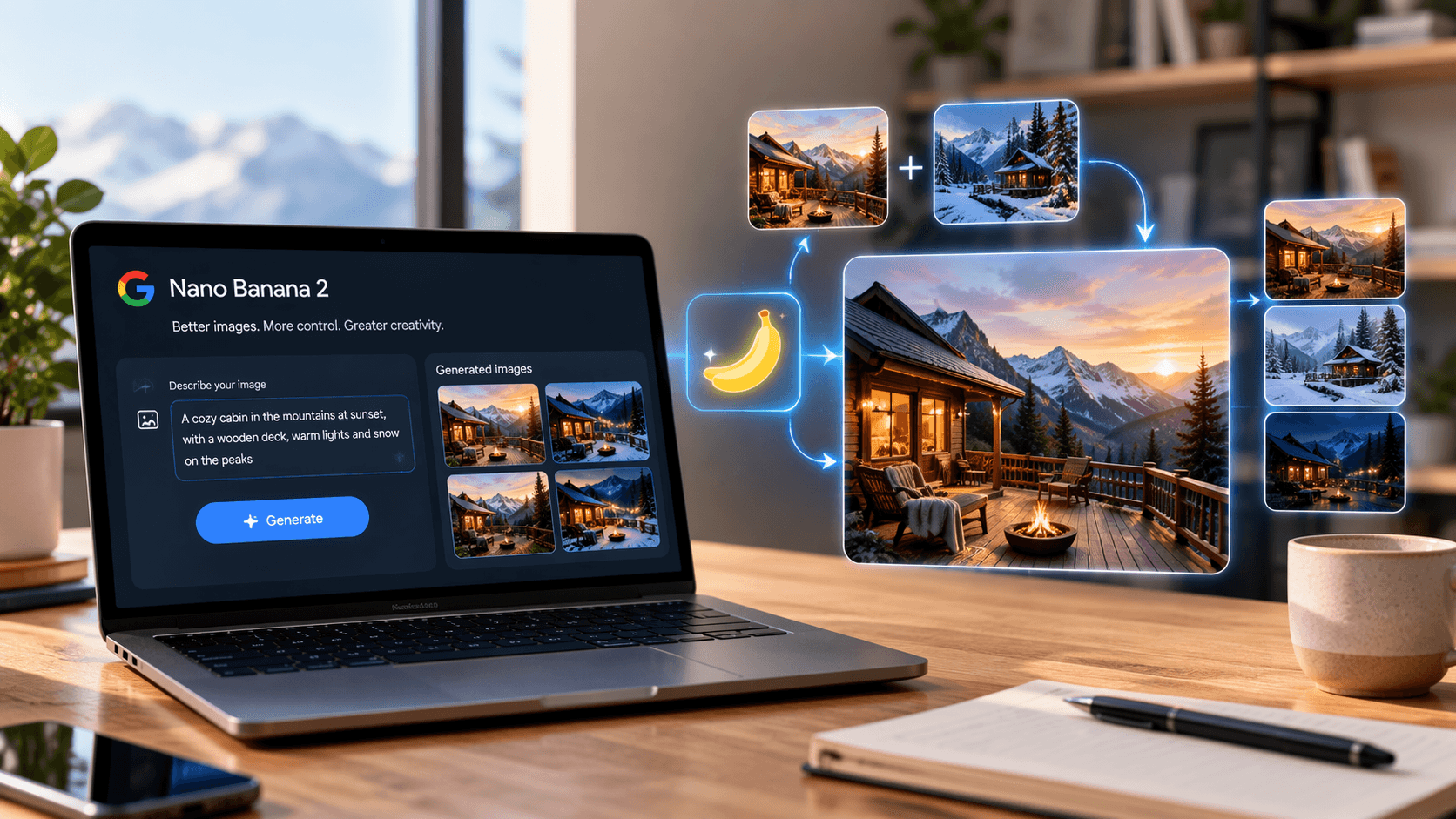
The landscape of artificial intelligence is constantly evolving, and at the forefront of this revolution is AI image generation. Google's latest offering, Nano Banana 2, represents a significant leap forward in this domain. This advanced model builds upon the successes of its predecessors, pushing the boundaries of what's possible in creating visual content from textual descriptions. Nano Banana 2 is poised to become an indispensable tool for developers and AI enthusiasts alike, offering unprecedented control and realism. This post will provide a comprehensive deep dive into its architecture, capabilities, and the exciting potential it unlocks.
Quick Answer: What is Google's Nano Banana 2?
Google's Nano Banana 2 is an advanced AI model designed for generating high-quality images from text prompts. It introduces significant improvements in speed, resolution, and realism compared to previous iterations, making it a powerful tool for developers and AI enthusiasts looking to create sophisticated visual content.
Architecture and Core Technologies Behind Nano Banana 2
At its core, Nano Banana 2 leverages a sophisticated blend of cutting-edge AI technologies. While specific architectural details are proprietary, it's widely understood to be built upon advanced diffusion models, likely incorporating elements of transformers for enhanced contextual understanding and potentially generative adversarial networks (GANs) for refining output quality. The training data is colossal, comprising a diverse and meticulously curated dataset of images and their corresponding textual descriptions, spanning a vast array of subjects, styles, and complexities. Google's methodology emphasizes not just scale but also the nuanced understanding of relationships between text and visual elements. Novel techniques likely include improved attention mechanisms and more efficient sampling strategies, allowing the model to generate coherent and detailed images with remarkable fidelity. For developers, understanding these underlying technologies is key to harnessing Nano Banana 2's full potential.
Image Generation Capabilities: From Text to Stunning Visuals
The true magic of Nano Banana 2 lies in its ability to translate abstract textual concepts into concrete, often breathtaking, visual realities. Users can provide prompts ranging from simple descriptions like "a serene sunset over a calm ocean" to highly complex narratives involving specific artistic styles, moods, and intricate details. The model excels at interpreting nuance, allowing for fine-grained control over the generated output. Its strengths are particularly evident in generating photorealistic landscapes, expressive portraits, and imaginative abstract art. However, like all AI models, Nano Banana 2 is not without its limitations. Potential biases inherited from the training data can sometimes manifest in the generated images, and extremely abstract or nonsensical prompts may still yield unpredictable results. Continuous refinement and user feedback are crucial for addressing these challenges.
- Example prompt: "A steampunk owl wearing goggles, perched on a stack of antique books, digital art."
- Generated image showcases intricate mechanical details on the owl, a rich, textured background of books, and a distinct steampunk aesthetic.
- Example prompt: "A hyperrealistic portrait of an elderly woman with kind eyes, soft studio lighting, bokeh background."
- Generated image captures subtle wrinkles, lifelike skin texture, and a gentle, warm atmosphere.
- Example prompt: "An abstract representation of joy, using vibrant colors and flowing shapes, watercolor style."
- Generated image is a dynamic composition of energetic colors and fluid forms, evoking a sense of happiness.
Performance Benchmarks: Speed, Quality, and Efficiency
In the competitive arena of AI image generation, performance is paramount. Nano Banana 2 sets a new standard, demonstrating significant improvements in key metrics. Benchmark results indicate a substantial reduction in image generation time compared to previous models, making real-time or near-real-time generation feasible for many applications. Crucially, this speed increase does not come at the expense of quality. Metrics such as Fréchet Inception Distance (FID) and Inception Score (IS) show Nano Banana 2 producing images with higher visual fidelity and diversity. Computational efficiency has also been a focus, with optimizations aimed at reducing the resource footprint. Developers can analyze these trade-offs to select the optimal balance between generation speed, image quality, and computational cost for their specific use cases and hardware configurations, whether deploying on powerful servers or more resource-constrained environments.
Developer Tools and APIs: Integrating Nano Banana 2 into Your Projects
Google provides a robust suite of developer tools and APIs designed to make integrating Nano Banana 2 into existing or new projects as seamless as possible. These resources empower developers to programmatically generate images, control parameters, and fine-tune the model's behavior. The API documentation is comprehensive, offering clear guidance and practical code examples in popular programming languages like Python and JavaScript. Options for deployment are flexible, ranging from a convenient cloud-based API service, ideal for quick integration and scalability, to the possibility of local installation for applications requiring maximum control or offline capabilities. Furthermore, developers can explore options for customizing and fine-tuning Nano Banana 2 using their own datasets, enabling highly specialized image generation tailored to unique application requirements.
Use Cases and Applications: Unleashing the Power of AI Image Generation
The potential applications for Nano Banana 2 are vast and span across numerous industries. In the realm of art and design, it can serve as a powerful tool for concept generation, mood boarding, and creating unique digital artworks. Marketers can leverage it for generating custom ad creatives, social media visuals, and product mockups tailored to specific campaigns. The gaming industry can utilize it for rapid asset creation, background generation, and character concepting. Beyond these, Nano Banana 2 holds promise for content creators needing unique illustrations, for researchers visualizing complex data, and for developers building immersive experiences in virtual and augmented reality. Innovative projects are already emerging, showcasing its versatility. However, it's crucial to address the ethical considerations surrounding AI image generation, including the potential for misuse in creating deepfakes or spreading misinformation. Responsible development and deployment are key.
The Future of AI Image Generation: Trends and Predictions
The field of AI image generation is evolving at an exponential pace. We are seeing emerging trends like hyper-personalized image generation, where models create visuals tailored to individual user preferences and contexts in real-time. Interactive image editing, allowing users to modify generated images through natural language commands or direct manipulation, is another exciting frontier. Future advancements will likely focus on even greater photorealism, improved understanding of complex physics and lighting, and the ability to generate dynamic or animated content. The impact on society will be profound, democratizing visual creation, transforming industries, and potentially blurring the lines between reality and artificiality. The long-term implications of increasingly realistic and accessible AI-generated images warrant ongoing discussion and careful consideration as we shape the future of art, design, and technology.
Frequently Asked Questions
- Q: How does Nano Banana 2 compare to previous AI image generators?
- A: Nano Banana 2 offers significant improvements in speed, resolution, and realism, making it more efficient and capable than many predecessors.
- Q: Can I use Nano Banana 2 for commercial projects?
- A: Typically, commercial use depends on the specific licensing terms provided by Google. Developers should consult the official documentation.
- Q: What kind of prompts work best with Nano Banana 2?
- A: Clear, descriptive prompts that include details about subject, style, mood, and composition tend to yield the best results.
- Q: Are there ethical concerns with AI image generation?
- A: Yes, concerns include potential misuse for misinformation and bias in generated content. Responsible usage and development are crucial.
Conclusion: Nano Banana 2 - A Game Changer?
In summary, Google's Nano Banana 2 represents a monumental step forward in AI image generation. Its advanced architecture, impressive capabilities, and developer-friendly tools position it as a transformative technology. From enhanced realism and speed to nuanced prompt interpretation, the model offers unprecedented creative potential. We encourage all developers and AI enthusiasts to explore Nano Banana 2, experiment with its features, and discover how it can revolutionize your projects. The impact of this technology on the future of visual content creation is undeniable, and Nano Banana 2 is undoubtedly at the forefront of this exciting evolution.
At BigOsoft, we are passionate about harnessing the power of cutting-edge AI technologies like Nano Banana 2 to deliver innovative solutions for our clients. If you're looking to integrate advanced AI capabilities into your business, explore custom AI development, or need expert consultation on your AI strategy, BigOsoft is here to help. Contact us today to discuss your project needs and discover how we can bring your vision to life with the power of artificial intelligence. Visit our portfolio to see examples of our successful AI implementations and get a free consultation with our AI experts.