
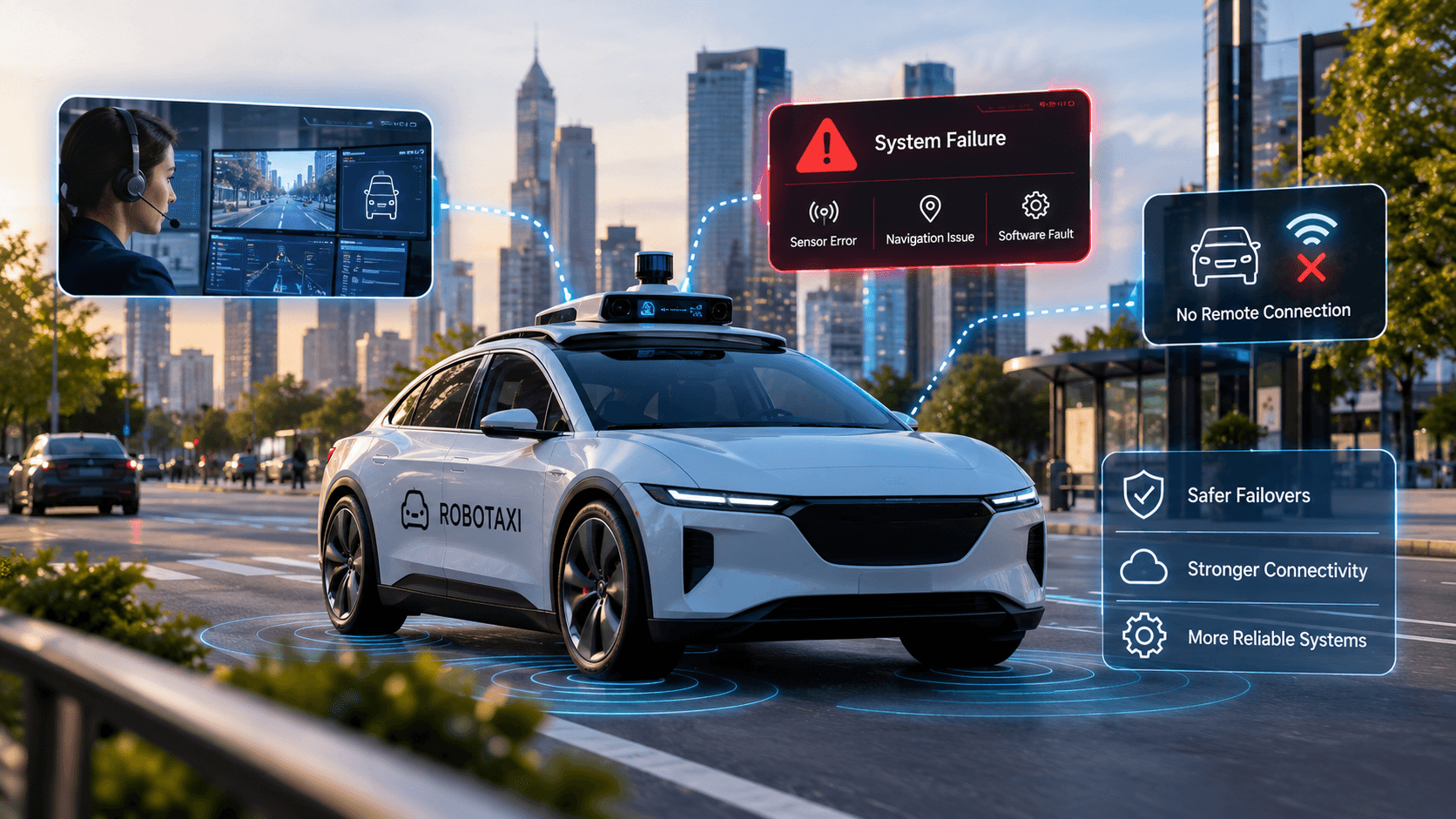

Introduction: The Promise and Peril of Robotaxis
- Briefly introduce the robotaxi concept and its potential benefits (e.g., reduced accidents, increased accessibility).
- Highlight the current state of robotaxi deployment and the gap between expectations and reality.
- Introduce the core challenges: remote assistance and system failures, and why they are critical to address for safe and reliable operation.
The dream of robotaxis – fully autonomous vehicles providing on-demand transportation – has captured the public imagination. The potential benefits are immense: a significant reduction in traffic accidents caused by human error, increased mobility for the elderly and disabled, and optimized traffic flow leading to less congestion and pollution. However, the reality of widespread robotaxi deployment is proving to be more complex than initially envisioned. While pilot programs are expanding, the seamless, ubiquitous service promised by early proponents is still some way off. This gap between expectation and reality is largely due to two critical, interconnected challenges: the necessity of robust remote assistance systems and the imperative to overcome inevitable system failures. Addressing these hurdles is paramount for ensuring the safety, reliability, and public acceptance required for the future of autonomous transportation.
Quick Answer: Robotaxis require sophisticated remote assistance to handle unpredictable situations and passenger needs that autonomous systems cannot manage alone. System failures, from sensor malfunctions to software glitches, pose significant safety risks. Overcoming these challenges involves building resilient remote support infrastructure, implementing redundant systems, rigorous testing, and adhering to evolving regulations to ensure safe and reliable autonomous mobility.
The Critical Role of Remote Assistance in Robotaxi Operations
Even the most advanced autonomous driving systems will encounter situations they are not programmed to handle. These 'edge cases' – unexpected road closures, complex construction zones, unusual pedestrian behavior, or even a passenger needing assistance – require human intervention. This is where remote assistance, often referred to as teleoperation or remote guidance, becomes indispensable. It acts as a safety net, allowing a remote operator to guide the vehicle through difficult scenarios or provide support to passengers. The levels of remote assistance can vary, from simple remote guidance where an operator suggests a path, to full teleoperation where the operator directly controls the vehicle's movement, albeit usually at low speeds and in specific contexts. The primary challenge lies in the execution: maintaining low latency communication, ensuring sufficient bandwidth for real-time video and sensor data, and providing operators with the necessary situational awareness to make split-second decisions. Without effective remote assistance, robotaxis would be forced to pull over or cease operation whenever they encounter ambiguity, severely limiting their utility and reliability.
System Failures: A Robotaxi's Achilles Heel
Like any complex technological system, robotaxis are susceptible to various forms of system failure. These can range from hardware issues, such as sensor malfunctions (cameras, LiDAR, radar), to software bugs, communication breakdowns with central servers, or even power system failures. The consequences of such failures can be severe. A sudden sensor failure could lead to a loss of vehicle control, potentially resulting in an accident. Software glitches might cause erratic driving behavior or misinterpret road conditions. Communication loss could prevent the vehicle from receiving critical updates or instructions, and importantly, disable remote assistance when it's most needed. These failures not only pose immediate safety risks but also erode public trust. If passengers and the public cannot rely on robotaxis to operate safely and consistently, widespread adoption will remain elusive. Therefore, robust fault detection, comprehensive redundancy in critical systems, and well-defined fail-safe mechanisms are not just desirable; they are absolute necessities.
Building Robust Remote Assistance Systems
Creating a reliable remote assistance system requires a multi-faceted approach. Key components include high-bandwidth, low-latency communication networks, often leveraging 5G technology, to transmit real-time data streams from the vehicle. The operator interface must be intuitive, providing a clear, comprehensive view of the vehicle's surroundings and status, akin to what the onboard system perceives. This often involves integrating data from multiple sensors and presenting it in an easily digestible format. Furthermore, advanced AI and machine learning are crucial. AI can help pre-process data, identify potential issues for the operator to review, and even automate certain routine remote tasks, freeing up human operators for more complex scenarios. Machine learning can also analyze historical data from remote interventions to continuously improve the efficiency and effectiveness of the assistance process. Crucially, human factors engineering must be at the forefront of designing these interfaces. Operators need tools that minimize cognitive load and support rapid, accurate decision-making under pressure. Comprehensive data logging is also vital for post-incident analysis and continuous system improvement.
Mitigating System Failures Through Redundancy and Testing
The principle of redundancy is fundamental to building resilient robotaxi systems. This means incorporating multiple, independent systems that can take over if a primary component fails. For instance, a robotaxi might have multiple types of sensors (cameras, LiDAR, radar) providing overlapping data, so if one fails, others can compensate. Critical systems like braking and steering might have redundant actuators and power supplies. Beyond hardware, software redundancy and diverse development approaches can help prevent single points of failure. Rigorous testing and validation are equally important. This involves extensive real-world testing in diverse environments and conditions, but also sophisticated simulation. Virtual environments allow engineers to test the robotaxi system against millions of miles of driving scenarios, including rare and dangerous edge cases, far more efficiently and safely than is possible in the physical world. This combination of redundancy and exhaustive testing is key to identifying and rectifying potential failure points before they can impact safety or service reliability.
The Role of Regulation and Standardization
The rapid advancement of robotaxi technology often outpaces regulatory frameworks. Clear, consistent, and adaptable regulations are essential for guiding development and ensuring public safety. Governments and industry bodies need to establish standards for safety performance, data privacy, cybersecurity, and the operational requirements for remote assistance. Standardization across the industry will facilitate interoperability and allow for easier scaling of services. Furthermore, fostering collaboration and data sharing – while respecting proprietary information – can accelerate learning and improve safety across all robotaxi operators. Sharing anonymized data on challenging scenarios and successful interventions can help the entire ecosystem mature faster. The regulatory landscape will undoubtedly shape the pace and direction of robotaxi deployment, influencing everything from vehicle design to operational domains.
The Future of Robotaxi Operations: A Path to Safe and Reliable Autonomous Transportation
The journey towards fully realized robotaxi services is complex, marked by significant technical and operational challenges, particularly concerning remote assistance and system failures. However, by focusing on building robust remote support infrastructure, implementing comprehensive redundancy, conducting exhaustive testing, and collaborating within a clear regulatory environment, these hurdles are surmountable. The future of robotaxi operations hinges on a steadfast commitment to safety, reliability, and accessibility. We envision a future where autonomous vehicles seamlessly integrate into our transportation networks, offering unparalleled convenience and mobility. Ongoing research and development in areas like AI, sensor technology, and communication networks are continuously pushing the boundaries, paving the way for a future where robotaxis are not just a novelty, but a safe, dependable, and integral part of daily life.
FAQ
- What is remote assistance in the context of robotaxis? It's a system where human operators remotely guide or support a robotaxi when its autonomous systems encounter situations they can't handle alone, such as complex traffic scenarios or passenger requests.
- Why are system failures a major concern for robotaxis? System failures, like sensor malfunctions or software bugs, can compromise the vehicle's ability to navigate safely, potentially leading to accidents and eroding public trust.
- How does redundancy help robotaxis? Redundancy means having backup systems (e.g., multiple sensors, dual processors) that can take over if a primary component fails, ensuring continued safe operation.
- What is the role of AI in robotaxi remote assistance? AI can help operators by pre-analyzing data, identifying critical situations, and automating routine tasks, making remote assistance more efficient and effective.
Navigating the complexities of robotaxi development requires specialized expertise. At BigOsoft, we partner with innovators to tackle the most challenging aspects of autonomous systems, including the design and implementation of resilient remote assistance platforms and robust system failure mitigation strategies. Our deep understanding of software engineering, AI, and system safety allows us to provide tailored solutions that accelerate your path to market. Contact us today to discuss your specific needs and explore how BigOsoft can empower your robotaxi innovation. Visit our website to learn more about our comprehensive suite of services and our commitment to shaping the future of autonomous transportation.