
Introduction: The Generative AI Revolution in Filmmaking
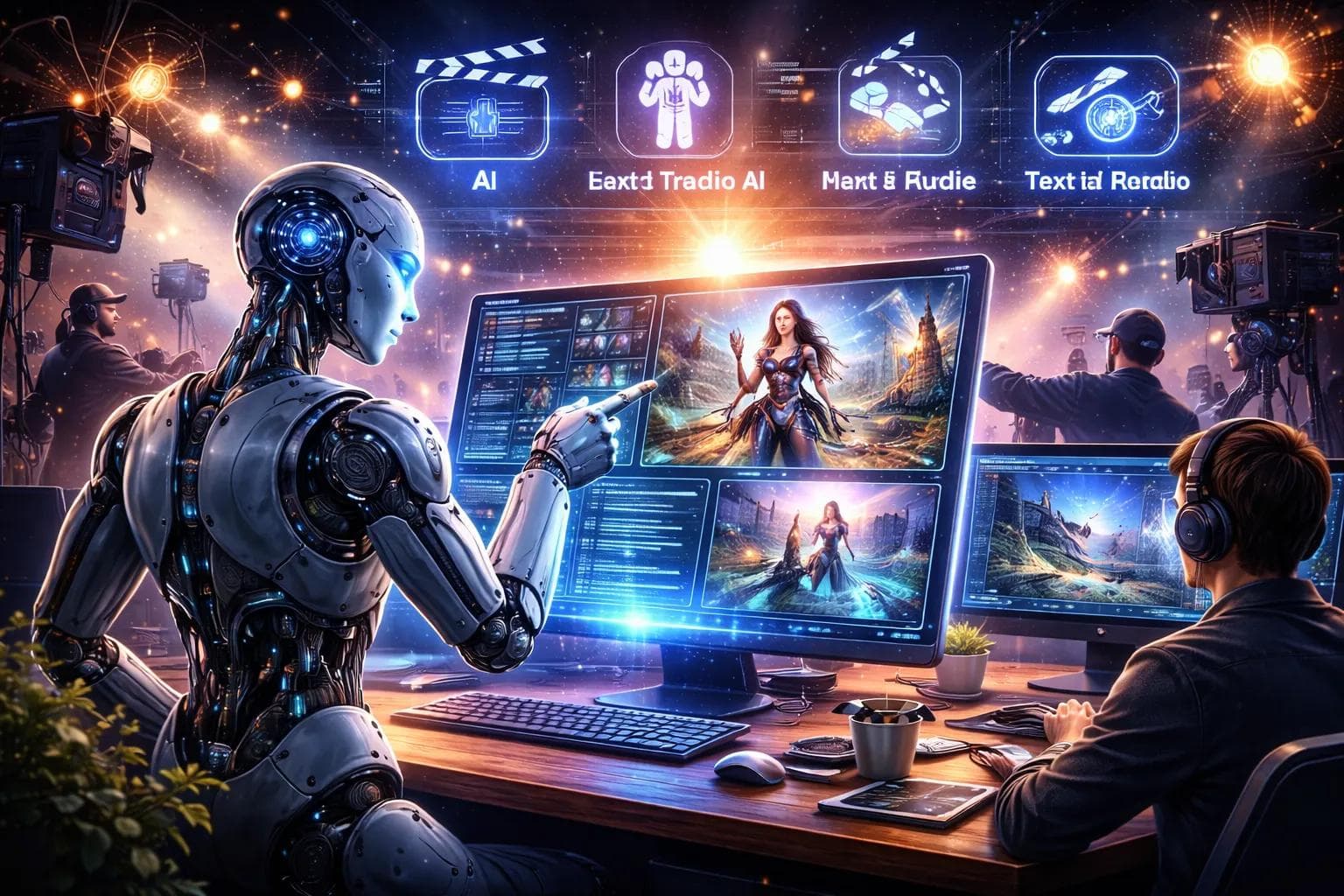
Generative AI, a powerful branch of artificial intelligence, is rapidly changing the landscape of numerous industries, and filmmaking is no exception. These sophisticated algorithms can create novel content, from text and images to music and video, based on the data they are trained on. The film industry, always on the cusp of technological innovation, is increasingly adopting AI tools to streamline processes, unlock new creative avenues, and, crucially, reduce the substantial costs associated with movie production. At BigOsoft, we are at the forefront of providing cutting-edge AI solutions designed to empower filmmakers and studios. This post explores how generative AI is revolutionizing film production and significantly cutting costs.
Quick Answer
Generative AI is revolutionizing film production by automating tasks, enhancing creative processes, and optimizing resource allocation, leading to significant cost reductions. From scriptwriting and storyboarding to VFX and editing, AI tools are making filmmaking more efficient and accessible.
AI-Powered Scriptwriting and Storyboarding
- How AI can assist in generating story ideas and plot outlines.
- AI tools for script refinement and dialogue optimization.
- Using AI for automated storyboard creation and visualization.
- Examples of AI-generated scripts or storyboards (if available).
The journey of a film begins with a script, and generative AI is proving to be an invaluable partner in this initial phase. AI algorithms can analyze vast datasets of existing scripts and stories to generate novel concepts, suggest plot twists, and even outline entire narratives. For script refinement, AI can analyze dialogue for pacing, consistency, and emotional impact, offering suggestions for improvement. Furthermore, AI can translate script descriptions into visual storyboards, rapidly creating detailed frames and sequences that help visualize the film's flow and aesthetic. While fully AI-generated feature scripts are still emerging, AI's role in ideation and refinement is already accelerating the creative process and reducing the time spent on early development.
Streamlining Pre-Production with AI
- AI-driven location scouting and virtual set design.
- AI for casting assistance and talent matching.
- Automated scheduling and resource allocation using AI.
- Cost savings achieved through AI-optimized pre-production processes.
Pre-production is notoriously complex and time-consuming. AI is stepping in to simplify these challenges. AI-powered tools can analyze geographical data and visual information to identify optimal filming locations, even creating virtual mock-ups of sets. In casting, AI can analyze actor databases, cross-referencing performances, availability, and even audience reception data to suggest the best fits for roles, saving significant time for casting directors. Moreover, AI excels at optimizing complex logistics. It can create dynamic shooting schedules that adapt to changing conditions, manage crew and equipment allocation efficiently, and predict potential bottlenecks. These optimizations translate directly into reduced pre-production costs by minimizing delays, unnecessary travel, and inefficient resource use.
AI in Visual Effects (VFX) and Post-Production
- Accelerating VFX creation with AI-powered tools.
- AI for automated rotoscoping, compositing, and cleanup.
- Using AI for realistic CGI character generation and animation.
- AI-driven color correction and grading for enhanced visuals.
Visual effects and post-production are often the most expensive parts of filmmaking. Generative AI is making significant inroads here, dramatically speeding up laborious tasks. AI tools can automate complex processes like rotoscoping (isolating objects frame by frame), compositing (combining visual elements), and digital cleanup, reducing the need for extensive manual labor. AI is also being used to generate highly realistic CGI characters and environments, and to assist in animation, making complex digital creations more accessible. Furthermore, AI can analyze footage to suggest or automatically apply color correction and grading, ensuring a consistent and professional look across the entire film. This acceleration and automation directly translate into substantial savings in both time and budget for VFX and post-production.
AI-Enhanced Editing and Sound Design
- AI-assisted video editing for faster turnaround times.
- Automated scene selection and pacing optimization.
- AI for sound design, including Foley and music generation.
- Improving audio quality and clarity with AI-powered tools.
The editing suite and sound studio are also benefiting from AI integration. AI algorithms can analyze raw footage to suggest optimal cuts, assemble rough edits, and even help fine-tune pacing based on narrative goals. This significantly speeds up the editing process, allowing editors to focus on the more creative aspects of storytelling. In sound design, AI can generate realistic sound effects (Foley), compose original music scores tailored to the film's mood, and even synthesize dialogue. AI-powered tools are also adept at cleaning up audio, removing background noise, and enhancing clarity, ensuring a polished final product. These advancements not only save time but also open up new sonic possibilities that might have been prohibitively expensive or complex to achieve manually.
Reducing Film Production Costs with AI: Real-World Examples
- Case studies of films that have successfully used AI to cut costs.
- Quantifiable data on cost savings achieved through AI implementation.
- Analysis of how AI can optimize resource allocation and minimize waste.
- Addressing concerns about job displacement and the future of film roles.
While specific film titles often keep their technological advancements confidential, the trend is undeniable. Studios are increasingly leveraging AI for tasks ranging from predictive analytics on audience engagement to automating repetitive post-production tasks. Early adopters report significant reductions in labor costs for VFX, animation, and editing. For instance, AI-powered rotoscoping can reduce the time spent on this task by up to 70%, directly impacting budget lines. AI's ability to optimize scheduling and resource allocation prevents costly delays and overruns. While concerns about job displacement are valid, the reality is that AI is more likely to augment human roles, freeing up creatives to focus on higher-level conceptualization and artistry, rather than replacing them entirely. The future likely involves a collaborative environment where AI handles the heavy lifting, and human talent guides the creative vision.
The Future of Filmmaking: AI as a Creative Partner
- Exploring the potential of AI to unlock new creative possibilities.
- AI as a tool for experimentation and innovation in filmmaking.
- The ethical considerations of using AI in film production.
- The evolving role of filmmakers in an AI-driven world.
Looking ahead, generative AI promises to be more than just a cost-saving tool; it's poised to become a powerful creative partner. AI can generate entirely new visual styles, explore countless narrative permutations, and create immersive experiences previously unimaginable. Filmmakers can use AI for rapid prototyping of ideas, experimenting with different aesthetics and story arcs without significant upfront investment. However, the integration of AI also brings ethical considerations, such as data privacy, copyright of AI-generated content, and the potential for bias in algorithms. As AI becomes more integrated, the role of the filmmaker will evolve, shifting towards curation, direction, and leveraging AI's capabilities to realize ambitious artistic visions. The focus will remain on human creativity, amplified by intelligent tools.
FAQ
- Can generative AI replace human filmmakers?
- What are the biggest cost savings from using AI in film?
- Is AI technology mature enough for major film productions?
- How can small independent filmmakers benefit from AI?
Generative AI is unlikely to replace human filmmakers entirely; instead, it will augment their capabilities, handling repetitive tasks and offering creative suggestions. The biggest cost savings come from automating VFX, post-production tasks, and optimizing pre-production logistics. While rapidly advancing, AI is already mature enough for significant integration into major film productions, particularly in VFX and editing. Independent filmmakers can benefit immensely from AI by accessing powerful tools for script development, storyboarding, and even generating visual assets at a fraction of traditional costs, democratizing filmmaking.
Conclusion: Embrace the AI Revolution with BigOsoft
The integration of generative AI into film production offers unprecedented opportunities to enhance creativity, streamline workflows, and achieve significant cost reductions. From initial script concepts to final edits and visual effects, AI is reshaping every facet of filmmaking. To remain competitive and push the boundaries of cinematic storytelling, embracing these advanced technologies is no longer optional, but essential. BigOsoft is dedicated to empowering the film industry with state-of-the-art AI solutions tailored to your unique production needs. Contact BigOsoft today to learn more about our AI solutions and how we can help you revolutionize your film production process. Visit our website or schedule a consultation.