

Introduction: The Rise of AI Roleplay and Character.AI
The landscape of digital interaction is rapidly evolving, and at the forefront of this transformation is the burgeoning field of AI-powered roleplay. Platforms like Character.AI have emerged as pioneers, offering users unique opportunities to engage with artificial intelligence in dynamic and creative ways. Character.AI, in particular, has captured the imagination of millions with its ability to create and interact with AI personas, fostering a growing community around AI roleplay. This innovative approach to AI interaction sets it apart, paving the way for new forms of digital engagement. Now, with the introduction of its 'Books mode,' Character.AI is poised to further revolutionize how we experience narratives. This exploration will delve into this exciting new feature and its potential impact on the very act of reading.
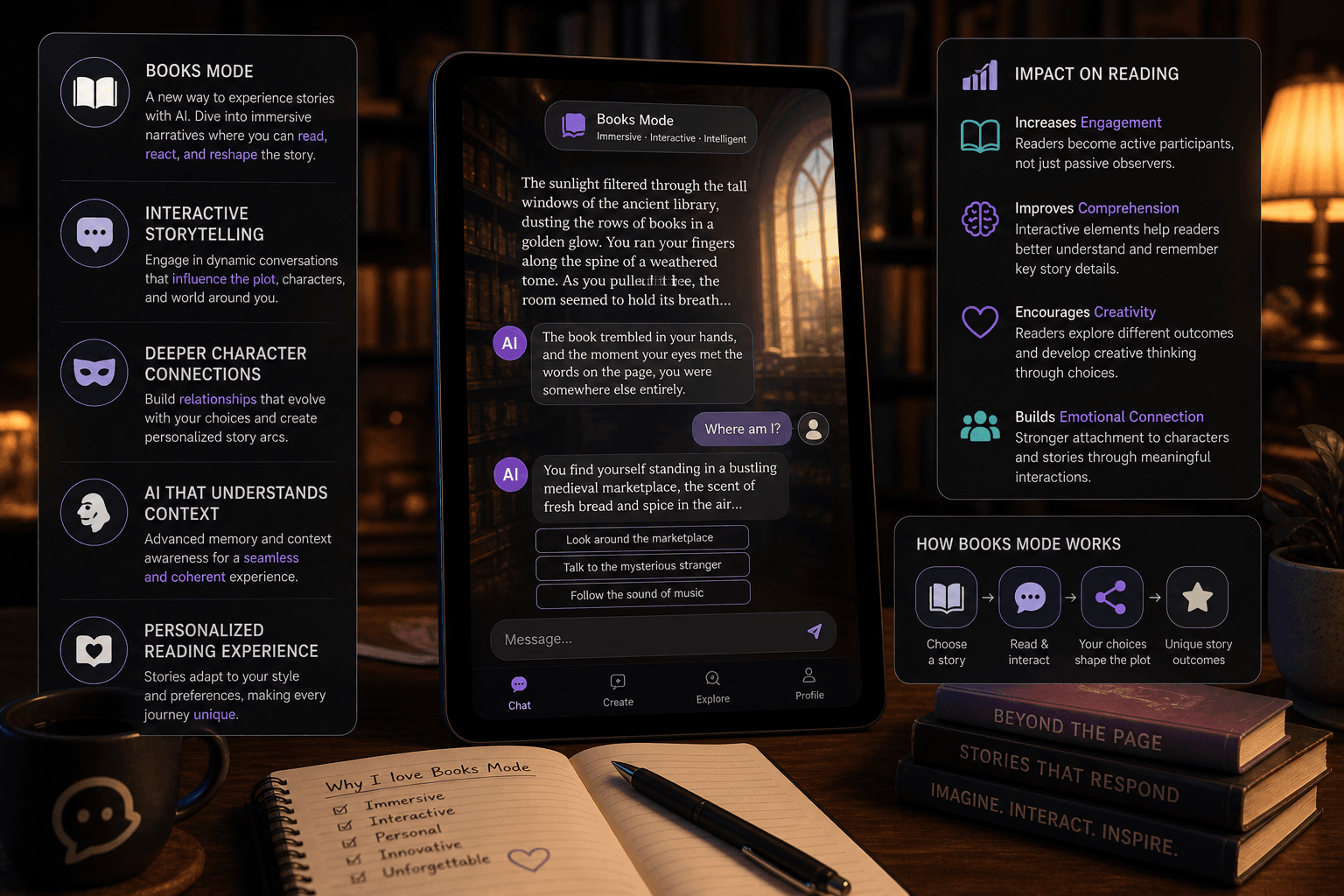
Quick Answer: Character.AI's Books mode transforms reading into an interactive experience where users can influence and co-create stories with AI characters. This mode enhances engagement by making readers active participants, potentially impacting traditional reading habits by offering a more dynamic and personalized literary journey.
What is Character.AI's Books Mode?
- Character.AI's Books mode is a specialized feature designed to facilitate interactive storytelling, moving beyond simple chat conversations.
- It differs from the standard chat interface by focusing on the development and progression of a narrative, akin to reading a book or playing a text-based adventure game.
- The core of Books mode lies in its interactive storytelling aspect, where the AI acts as a narrator and character, guiding the user through a story.
- Crucially, users have the ability to influence the narrative through their choices and inputs, making them co-authors of the unfolding plot.
Imagine stepping into a novel where you're not just a passive observer but an active participant. That's the essence of Character.AI's Books mode. Unlike the typical back-and-forth of a standard AI chat, Books mode is structured around narrative progression. The AI takes on the role of a storyteller, setting scenes, introducing characters, and presenting plot points. However, the magic truly happens when the user gets to make decisions. These choices directly impact how the story unfolds, leading to branching storylines and unique outcomes. It's a collaborative literary experience, blurring the lines between reader, writer, and player.
How Books Mode Enhances the Reading Experience
The introduction of Books mode by Character.AI offers a compelling new dimension to how we engage with stories. The immersive qualities of interactive storytelling are undeniable. By allowing users to make choices that shape the narrative, Books mode transforms reading from a solitary, passive activity into a dynamic, participatory adventure. This active involvement can significantly cater to diverse reading preferences. Those who enjoy strategic decision-making or wish to explore 'what if' scenarios will find this mode particularly appealing. Furthermore, the benefits of active participation extend to potentially improved comprehension and deeper engagement with the material. When readers are invested in the outcome and actively contribute to it, their focus sharpens, and their understanding of the characters and plot can deepen considerably. It’s a way to not just read a story, but to live it.
The Impact on Traditional Reading Habits
The advent of AI-driven narrative experiences like Character.AI's Books mode inevitably prompts questions about its impact on traditional reading habits. We might witness a subtle yet significant shift from passive consumption to active participation in storytelling. This doesn't necessarily mean the end of traditional books, but rather an evolution in how literary content is consumed and created. Books mode could foster new forms of literary expression, where the narrative is fluid and co-authored by the reader and the AI. While some may express concerns about the future of conventional books, it's also possible that these interactive formats could reignite interest in storytelling for a generation accustomed to interactive media. The challenge lies in understanding how these new forms complement, rather than replace, the enduring appeal of the printed word or traditional e-books.
Character.AI Books Mode: Use Cases and Examples
The versatility of Character.AI's Books mode opens up a wide array of potential applications and user experiences. Imagine diving into a fantasy epic where your choices determine whether you become a valiant knight or a cunning rogue, or perhaps a mystery novel where your detective skills uncover clues leading to different culprits. Users can explore genres ranging from science fiction adventures on distant planets to historical dramas where their decisions alter the course of events. The platform thrives on user-created content, meaning countless unique stories are constantly being generated by the community. Beyond entertainment, there's significant potential for educational applications. Students could engage with historical scenarios, explore ethical dilemmas in simulated environments, or even practice language skills by interacting with AI characters in a narrative context. For instance, a history lesson could involve making choices as a historical figure, learning about consequences in a deeply engaging way.
The Future of AI-Driven Narratives
Looking ahead, the future of AI-driven narratives, exemplified by features like Character.AI's Books mode, holds immense promise. We can anticipate increasingly sophisticated and personalized storytelling experiences. AI could learn individual user preferences, crafting narratives that perfectly align with their tastes, moods, and even learning objectives. This could lead to truly unique, one-of-a-kind literary journeys for every user. However, as AI becomes more adept at content creation, ethical considerations surrounding AI-generated content will become paramount. Questions about authorship, originality, and the potential for bias in narratives will need careful consideration. Nevertheless, the role of AI in creative writing and content creation is undeniable, offering powerful tools for authors and storytellers to augment their creativity and reach new audiences.
SEO Optimization: Leveraging AI for Content Creation
Just as AI is revolutionizing storytelling, it's also transforming content creation and optimization. Tools powered by artificial intelligence can significantly aid in SEO efforts. This includes sophisticated keyword research, analyzing search trends, and understanding user intent to identify valuable topics. AI can also assist in content analysis, evaluating existing material for gaps, suggesting improvements, and even generating drafts that align with search engine best practices. By leveraging AI, content creators can enhance the visibility of their work, ensuring that engaging narratives and informative articles reach the intended audience more effectively. This synergy between AI and content creation further underscores the pervasive influence of artificial intelligence across various digital domains, including the evolving world of interactive storytelling.
Conclusion: Embracing the Evolution of Reading with AI
Character.AI's Books mode represents a significant leap forward in interactive storytelling, offering a glimpse into the future of how we engage with narratives. The key benefits lie in its ability to foster deeper engagement, personalize the reading experience, and transform passive consumption into active participation. This evolution has the potential to not only enhance our enjoyment of stories but also to improve comprehension and spark creativity. As AI continues to advance, we can expect even more innovative ways for artificial intelligence to enrich our literary lives. We encourage you to explore the possibilities of AI-driven narratives and experience firsthand how platforms like Character.AI are reshaping the reading landscape. Embrace this exciting evolution and discover new dimensions of storytelling.
FAQ
- What is the main difference between Character.AI's standard chat and Books mode? The standard chat focuses on conversational interaction, while Books mode is structured around developing and influencing a narrative.
- Can users create their own stories in Books mode? Yes, users can initiate stories and guide the AI, effectively co-creating the narrative.
- Is Books mode suitable for educational purposes? Absolutely, it offers potential for interactive learning, historical simulations, and language practice.
- Does Books mode replace traditional reading? It offers an alternative and complementary experience, focusing on interactivity rather than replacing the value of traditional books.
CTA: Enhance Your AI Strategy with BigOsoft
Ready to leverage the power of AI for your business? BigOsoft offers comprehensive AI solutions tailored to your needs, from custom development to strategic implementation. Contact us today to learn more about our services and how we can help you innovate. Visit our website or schedule a consultation to explore the possibilities.