
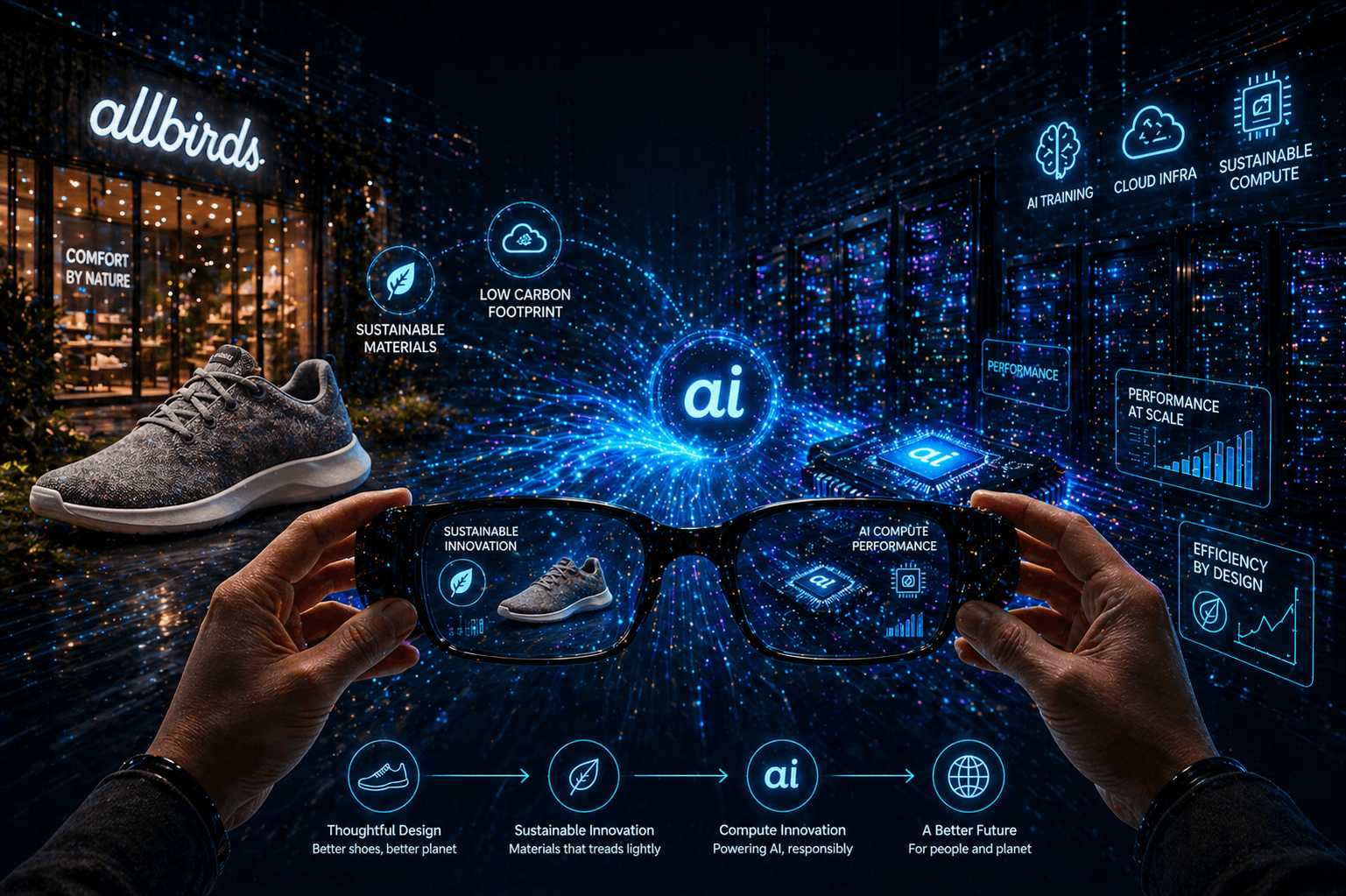

Introduction: Allbirds' Unexpected AI Turn
- Allbirds, a brand synonymous with sustainable comfort and stylish footwear, has recently announced a move that has sent ripples through both the fashion and tech industries: a significant pivot towards AI compute.
- This surprising strategic shift sees the company venturing beyond its established roots in eco-friendly apparel into the complex and rapidly evolving world of artificial intelligence infrastructure.
- This blog post aims to dissect the 'why' and 'how' behind Allbirds' ambitious AI compute pivot, exploring the potential synergies, market landscape, financial implications, and what this means for the future of the company and the broader retail sector.
Understanding Allbirds' Core Business Challenges
For years, Allbirds carved out a distinct niche, appealing to consumers who prioritized sustainability and minimalist design. However, the path of a direct-to-consumer (DTC) brand in the highly competitive footwear market is fraught with challenges. Recent years have seen increased pressure from both established giants and emerging players, leading to reports of slowing sales growth and profitability concerns. While their commitment to sustainable materials has been a powerful marketing tool, it may not have been enough to insulate them from broader economic headwinds and the intense competition that characterizes the global apparel industry. The limitations of relying solely on a 'green' narrative in a crowded marketplace are becoming increasingly apparent, prompting a need for diversification and new avenues for growth.
Why AI Compute? Exploring the Potential Synergies
The leap into AI compute from footwear might seem abrupt, but several potential synergies could be driving this strategic pivot. The retail sector, in particular, is ripe for AI-driven transformation. Imagine hyper-personalized customer recommendations based on vast datasets, sophisticated supply chain optimization to reduce waste and improve efficiency, or highly accurate demand forecasting that minimizes overstock and stockouts. Allbirds, having operated a DTC model for years, likely possesses a wealth of customer data. The question remains whether this data, combined with their understanding of consumer behavior and potentially unique operational insights, can be leveraged to develop or deploy AI solutions that offer a competitive edge. It's possible they aim to build proprietary AI infrastructure to enhance their own operations, or perhaps even to offer AI-as-a-service to other retailers.
The AI Compute Market Landscape: Opportunities and Risks
The AI compute market is a dynamic and rapidly expanding arena, dominated by tech giants like Nvidia, Intel, and AMD, alongside cloud providers such as AWS, Google Cloud, and Microsoft Azure. Growth trends are explosive, fueled by the increasing demand for machine learning, deep learning, and data analytics. For Allbirds to carve out a niche, they would likely need to focus on a specific, underserved segment. Edge computing for retail environments, for instance, could be a potential area, enabling real-time data processing for in-store analytics or personalized experiences without relying solely on cloud infrastructure. However, the risks are substantial. This is an incredibly capital-intensive market requiring significant R&D investment, specialized talent, and a robust go-to-market strategy to compete with established players. The barriers to entry are high, and the path to profitability can be long and uncertain.
Financial Implications: Investment and ROI Analysis
A pivot into AI compute necessitates a significant financial commitment. Developing or acquiring the necessary hardware, software, and talent for AI infrastructure requires substantial upfront investment. This includes capital expenditure for computing resources, ongoing operational costs for maintenance and upgrades, and expenditure on specialized personnel like AI engineers and data scientists. The potential return on investment (ROI) hinges on the success of their AI strategy. If they can create proprietary AI solutions that either drastically improve their own operational efficiency and profitability or become a marketable product/service, the ROI could be significant. However, the timeframe for achieving profitability in such a venture is often extended, potentially impacting investor confidence and the company's stock price in the short to medium term. Investors will be closely watching for clear milestones and a convincing roadmap.
Expert Opinions: What Industry Analysts are Saying
Industry analysts have offered a range of perspectives on Allbirds' strategic move. Some view it as a bold, forward-thinking diversification strategy, recognizing the immense potential of AI to revolutionize retail operations. They point to the company's existing customer base and data as valuable assets that could be leveraged effectively. Conversely, other analysts express caution, highlighting the immense challenges of entering the highly competitive AI compute market against established tech giants. Concerns about execution risk, the substantial capital required, and the potential dilution of the core Allbirds brand are frequently raised. 'While Allbirds has a strong brand identity in sustainability, translating that into a credible player in AI compute will require flawless execution and significant capital,' noted one retail technology analyst. Another commented, 'The success of this pivot will depend heavily on whether they can identify a truly unique value proposition within the AI landscape that leverages their existing strengths.'
The Future of Allbirds: A Tech Company in Disguise?
This strategic pivot raises fundamental questions about Allbirds' long-term identity. Could the company evolve from a sustainable footwear brand into a technology-first organization, leveraging AI to power not just its own operations but potentially offering solutions to the wider retail industry? This transformation could redefine its brand image, moving beyond eco-conscious apparel to become a leader in retail innovation. The implications for its sustainability efforts are also worth considering. Will the focus on AI compute detract from its core environmental mission, or can the two be integrated, perhaps by using AI to further optimize sustainable supply chains and reduce environmental impact? The potential exists for Allbirds to become a hybrid company, blending its ethical consumerism ethos with cutting-edge technological capabilities.
Conclusion: A Bold Move or a Risky Gamble?
Allbirds' decision to pivot towards AI compute is undoubtedly a bold strategic maneuver. It represents a significant departure from its core business, driven by the need to address market challenges and unlock new growth avenues. The potential synergies with retail operations are compelling, offering opportunities for enhanced personalization, efficiency, and forecasting. However, the path is fraught with considerable risks, including intense competition, high capital requirements, and the challenge of execution. Whether this move proves to be a visionary leap or a risky gamble will depend on Allbirds' ability to navigate the complexities of the AI market, leverage its unique data assets, and maintain its brand integrity. This bold step underscores the transformative power of AI in reshaping industries, prompting us to question what the future holds for retail and how technology will continue to redefine consumer experiences.
Quick Answer
Allbirds is pivoting to AI compute to address challenges in the competitive footwear market and unlock new growth opportunities. By leveraging their existing customer data and operational insights, they aim to optimize retail operations through AI applications like personalization and supply chain management, potentially transforming into a tech-focused company.
FAQ
- What is AI compute? AI compute refers to the processing power and infrastructure required to run artificial intelligence and machine learning algorithms, often involving specialized hardware like GPUs.
- Why is Allbirds moving into AI compute? They are seeking new avenues for growth and efficiency by applying AI to retail challenges like personalization and supply chain optimization, aiming to gain a competitive edge.
- What are the risks for Allbirds? The primary risks include intense competition from established tech giants, high capital investment requirements, and the challenge of executing a successful transition into a new, complex industry.
CTA: Unlock Your AI Potential with BigOsoft
Is your company ready to leverage the power of AI? BigOsoft offers comprehensive AI solutions tailored to your specific business needs. Contact us today for a free consultation and discover how AI can transform your operations and drive growth.