
The digital landscape is rapidly evolving, and with it, the tools used to create and manipulate content. Among the most concerning advancements is the rise of AI deepfakes. These sophisticated synthetic media can blur the lines between reality and fabrication, posing significant threats to individuals, businesses, and society as a whole. Understanding what AI deepfakes are, how they are created, and the potential dangers they present is the first step in learning how to protect yourself and your organization from their malicious use. BigOsoft is at the forefront of developing solutions to combat this growing challenge.
What are AI Deepfakes and How are They Made?
AI deepfakes are synthetic media, typically videos or audio recordings, that have been manipulated using artificial intelligence and deep learning techniques to depict someone saying or doing something they never actually said or did. The term 'deepfake' is a portmanteau of 'deep learning' and 'fake.' While the concept of manipulating media is not new, the advent of powerful AI algorithms has made the creation of highly convincing fakes accessible and increasingly sophisticated. Early forms of manipulated media existed for decades, but deep learning, particularly Generative Adversarial Networks (GANs), has revolutionized the process. GANs involve two neural networks: a generator that creates fake data and a discriminator that tries to distinguish between real and fake data. Through this adversarial process, the generator becomes progressively better at creating realistic fakes. Deepfakes can manifest as video manipulations (swapping faces, altering expressions), audio impersonations (mimicking voices), or even static image alterations. Famous examples range from humorous celebrity face swaps to more concerning instances like political disinformation campaigns or non-consensual pornography.
The Dangers and Risks of Deepfakes
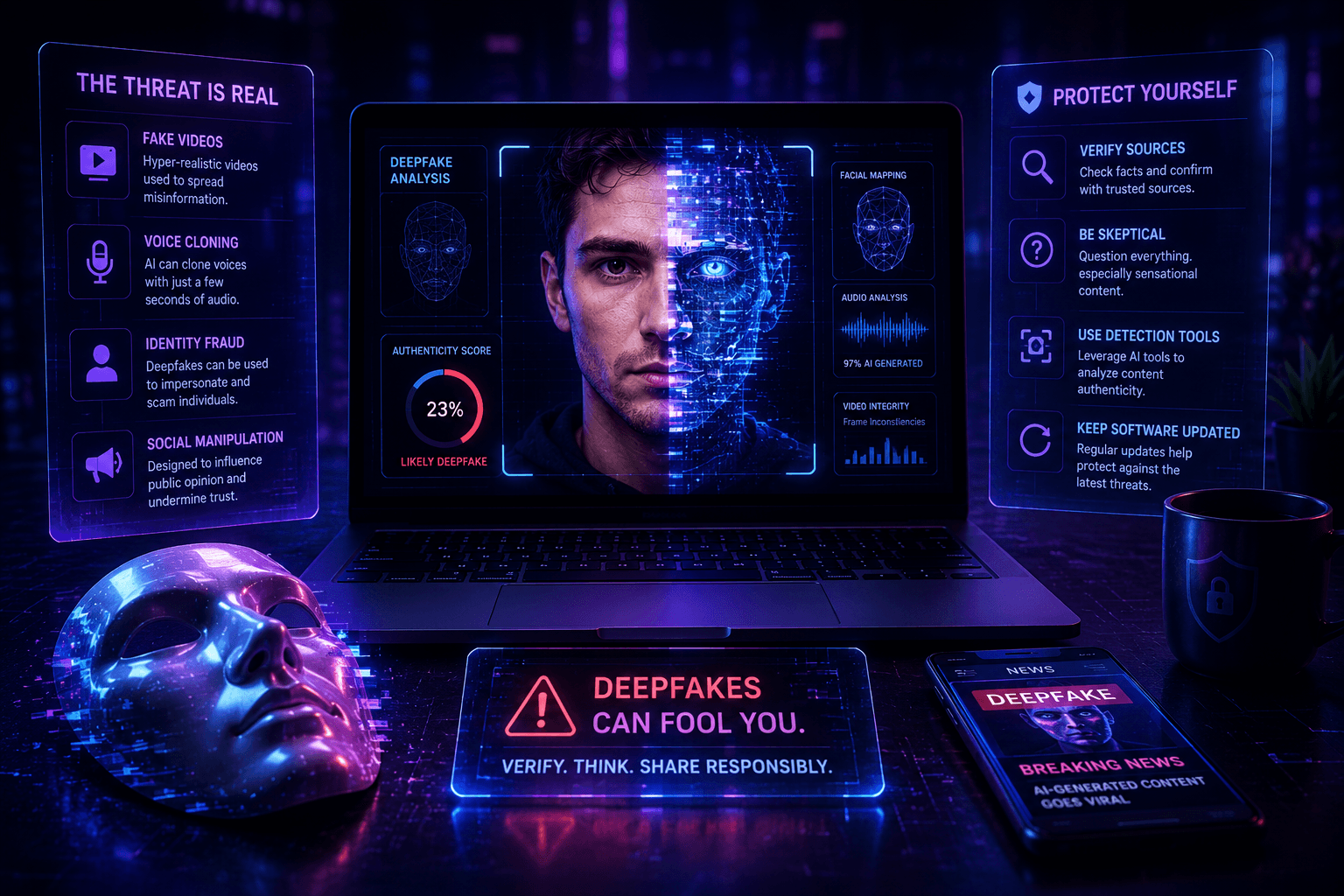
- Misinformation and propaganda: Deepfakes can be used to spread false narratives, manipulate public opinion, and sow discord by creating fabricated events or statements attributed to public figures.
- Reputation damage: Individuals and organizations can suffer severe reputational harm if deepfakes are used to falsely portray them in compromising or illegal situations, impacting personal lives and professional careers.
- Financial fraud: Sophisticated audio and video deepfakes can be employed in scams, such as impersonating executives to authorize fraudulent transactions or tricking individuals into revealing sensitive financial information.
- Political manipulation: The ability to create convincing fake videos of politicians can be used to influence elections, incite unrest, or undermine democratic processes by spreading damaging falsehoods.
- Erosion of trust in media: As deepfakes become more prevalent and realistic, it becomes increasingly difficult for the public to discern truth from fiction, leading to a general distrust of all media, including legitimate news sources.
Real-World Examples of Deepfake Damage
The theoretical dangers of deepfakes are already manifesting in the real world. We've seen instances where deepfakes have been used in political campaigns to discredit opponents, often through fabricated statements or compromising scenarios. Financial fraud is another significant concern, with reports of businesses being targeted by scams where deepfake audio or video was used to impersonate executives and authorize large financial transfers. The creation of deepfake pornography, often targeting women without their consent, has had devastating personal and psychological impacts on victims, leading to severe emotional distress and reputational damage. Furthermore, deepfakes have been instrumental in creating and disseminating fake news stories, making it harder for the public to rely on visual or auditory evidence. While some deepfake attacks have been thwarted due to detection methods or the inherent flaws in the fakes themselves, the increasing sophistication means that successful attacks are becoming more probable.
How to Detect AI Deepfakes: Key Indicators
Detecting deepfakes requires a critical eye and an awareness of potential tells. Visual inconsistencies are often the first clue; look for blurry or unnaturally smooth facial features, odd blinking patterns, unnatural head or body movements, and inconsistencies in lighting or shadows. Audio anomalies can include robotic-sounding voices, unnatural inflections, or poor lip-syncing that doesn't quite match the spoken words. Contextual clues are also vital: consider the source of the content – is it from a reputable news outlet or a random social media account? Does the narrative make logical sense, or does it seem designed to provoke an emotional response? While manual detection can be challenging, specialized deepfake detection tools and software are emerging that use AI to analyze subtle digital artifacts. Additionally, performing reverse image and video searches can sometimes help verify the authenticity of media by finding original sources or earlier versions.
Protecting Yourself from Deepfake Manipulation
- Be skeptical of online content: Always approach videos, audio, and images with a degree of skepticism, especially if they seem sensational or emotionally charged. Verify information from multiple reputable sources before believing or sharing it.
- Educate yourself and others: Understanding how deepfakes are made and the common indicators can empower you and your network to identify them more effectively. Share this knowledge with friends, family, and colleagues.
- Strengthen your online security: Protect your personal data and accounts with strong, unique passwords and multi-factor authentication. This makes it harder for malicious actors to gather the data needed to create convincing deepfakes of you.
- Report suspected deepfakes: If you encounter content that you believe to be a deepfake, report it to the platform where you found it. This helps social media sites and content hosts take action.
- Support media literacy initiatives: Advocate for and participate in programs that promote critical thinking and media literacy, helping society build resilience against misinformation.
The Future of Deepfake Technology and Countermeasures
The evolution of deepfake technology is a double-edged sword. On one hand, deepfake creation tools are becoming more sophisticated, producing hyper-realistic synthetic media that is increasingly difficult to detect with the naked eye. This necessitates a continuous arms race in developing advanced deepfake detection tools. Researchers and companies are actively working on AI-powered authentication and verification systems that can analyze media for subtle digital fingerprints left by AI generation processes. Ethical considerations and the need for robust regulations surrounding the creation and dissemination of deepfakes are paramount. Governments and international bodies are grappling with how to legislate this rapidly changing landscape. Emerging technologies like blockchain offer potential solutions for verifying media authenticity by creating immutable records of content origin and modifications, providing a trusted ledger for digital assets.
The Role of BigOsoft in Combating Deepfakes
At BigOsoft, we are deeply committed to fighting the spread of misinformation and protecting our clients from emerging digital threats, including AI deepfakes. Our advanced AI solutions are designed to detect and help prevent the dissemination of synthetic media by analyzing content for tell-tale signs of manipulation. Leveraging our extensive expertise in cybersecurity and data protection, we offer robust strategies to safeguard your digital assets and reputation. BigOsoft actively partners with industry leaders in deepfake detection and cybersecurity research to stay ahead of evolving threats. We also believe in empowering the public and businesses, offering resources and insights to educate on the risks and realities of deepfakes and synthetic media.
Conclusion: Staying Vigilant in the Age of Synthetic Media
The proliferation of AI deepfakes presents a significant challenge to our information ecosystem. The dangers range from widespread misinformation and propaganda to severe personal and financial harm. In this era of synthetic media, critical thinking and robust media literacy are no longer optional but essential skills for navigating the digital world. Empowering individuals with the knowledge to detect and protect themselves from manipulation is crucial. The ongoing battle against deepfakes and misinformation requires a collaborative effort between technology companies like BigOsoft, governments, educational institutions, and every individual user. By staying vigilant, informed, and proactive, we can collectively mitigate the risks posed by this powerful technology.
Frequently Asked Questions about Deepfakes
- Q: Can deepfakes be detected?
- A: Yes, while deepfakes are becoming more sophisticated, various detection methods and tools exist, analyzing visual and audio inconsistencies, as well as digital artifacts.
- Q: How can I protect my business from deepfake attacks?
- A: Implement strong cybersecurity measures, train employees on recognizing deepfakes, verify high-stakes communications through multiple channels, and consider specialized AI detection solutions.
- Q: Is creating deepfakes illegal?
- A: Laws vary by jurisdiction and intent. While the technology itself isn't illegal, using deepfakes for fraud, defamation, harassment, or non-consensual pornography is illegal in many places.
- Q: What is the difference between a deepfake and a simple edit?
- A: Simple edits alter existing media, while deepfakes use AI to generate entirely new, synthetic content that convincingly mimics real people or events.
Protect Your Business and Reputation with BigOsoft
Contact BigOsoft today to learn more about our cybersecurity solutions and how we can help you protect your business from the threat of deepfakes. Our expert team can assess your vulnerabilities, implement robust security measures, and provide ongoing monitoring to ensure your data and reputation remain secure.
Request a demo of our AI-powered threat detection platform and see how it can identify and mitigate deepfake attacks in real-time.
Schedule a consultation with our cybersecurity experts to discuss your specific needs and develop a customized protection plan.