
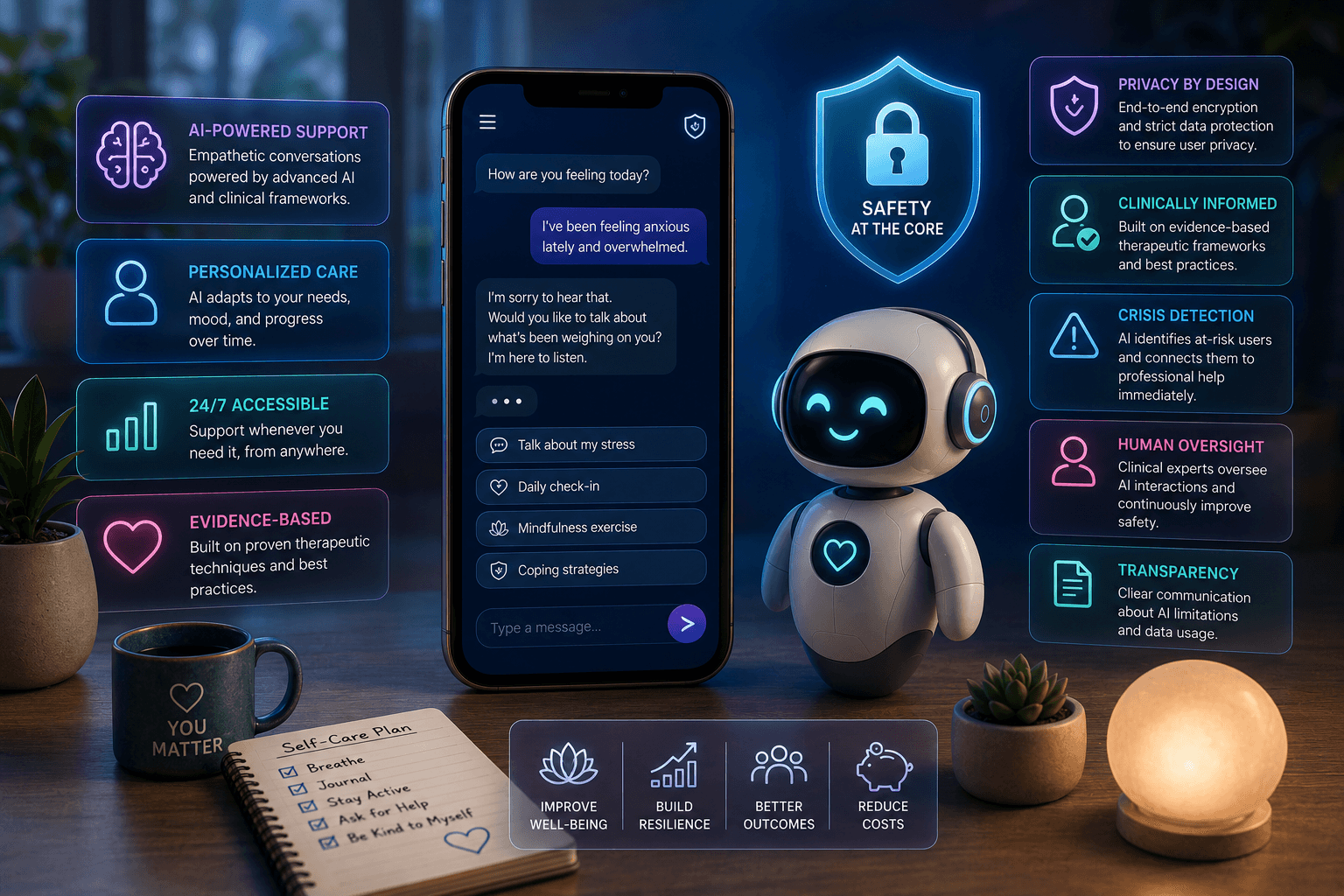

Introduction: The Rise of AI Therapy and Its Potential for Healthcare Startups
The landscape of mental healthcare is undergoing a profound transformation, driven in large part by advancements in artificial intelligence. AI therapy, a burgeoning field, leverages sophisticated algorithms and machine learning to offer accessible, scalable, and often more affordable mental health support. For healthcare startups, this presents an unprecedented opportunity to innovate and address the growing demand for mental wellness services. From personalized chatbots that offer immediate support to complex systems that analyze user data for tailored interventions, AI is rapidly becoming an indispensable tool. However, as we embrace the potential of AI in mental healthcare, it is paramount that we do so with a steadfast commitment to responsible development and deployment, ensuring safety and efficacy are at the forefront of every innovation. The integration of AI therapy is not just about technological advancement; it's about creating a more equitable and accessible mental healthcare ecosystem for everyone, especially for the dynamic and often stressed startup environment.
Quick Answer: AI therapy revolutionizes mental healthcare for startups by offering accessible, affordable, and scalable solutions through advanced technologies like NLP and ML. It provides personalized support, data-driven insights, and improved patient engagement, while crucial safety measures like bias mitigation and data privacy ensure responsible implementation.
How AI Therapy Apps are Evolving: From Chatbots to Personalized Treatment
- The evolution of AI therapy has moved far beyond simple rule-based chatbots. Early iterations offered basic conversational interfaces, providing generic advice or acting as digital journaling tools. Today, sophisticated AI systems are capable of understanding nuances in human language, recognizing emotional states, and adapting their responses in real-time.
- Natural Language Processing (NLP) and Machine Learning (ML) are the cornerstones of this evolution. NLP enables AI to interpret and process human language, understanding context, sentiment, and intent. ML allows these systems to learn from vast datasets of interactions, identifying patterns and predicting user needs, thereby enabling truly personalized treatment plans.
- Advanced features now include intelligent mood tracking that analyzes text, voice, or even behavioral data to identify trends and potential triggers. AI can offer personalized recommendations for coping strategies, mindfulness exercises, or therapeutic content. In critical situations, some AI systems are being developed to provide immediate crisis intervention support, alerting human professionals when necessary.
- Furthermore, AI plays a vital role in analyzing aggregated, anonymized patient data. This analysis provides invaluable insights into treatment effectiveness, identifies common challenges faced by users, and helps refine therapeutic approaches, leading to continuous improvement of the AI's capabilities and the overall quality of care.
Benefits of AI Therapy for Healthcare Startups: A Competitive Edge
- AI therapy dramatically improves patient access and reach. It can serve individuals in remote or underserved areas who may lack access to traditional in-person therapy, breaking down geographical barriers to care.
- The cost-effectiveness of AI-driven solutions is a significant advantage. By automating certain aspects of support and therapy delivery, startups can offer services at a lower price point than traditional methods, making mental healthcare more affordable.
- Scalability is another key benefit. AI platforms can handle a large volume of users simultaneously, allowing startups to grow and meet increasing demand without the proportional increase in infrastructure and human resources required for traditional models.
- Data-driven insights derived from AI interactions empower startups to continuously improve their programs. Analyzing user engagement, treatment effectiveness, and feedback allows for iterative development and optimization of therapeutic content and delivery.
- AI therapy tools can foster increased patient engagement and adherence to treatment. Interactive features, personalized reminders, and readily available support can help users stay motivated and consistent with their mental wellness journey.
The Critical Importance of Safety in AI Therapy Development
While the potential of AI therapy is immense, its development and deployment must be underpinned by a rigorous focus on safety and ethical considerations. The sensitive nature of mental health data and the potential impact of AI interventions necessitate a cautious and responsible approach. Healthcare startups must prioritize these aspects to build trust and ensure positive outcomes for users. Addressing potential biases in AI algorithms is crucial; if training data reflects societal biases, the AI may perpetuate them, leading to inequitable or ineffective treatment for certain demographics. Ensuring robust data privacy and security is non-negotiable. Protecting sensitive patient information, often requiring strict adherence to regulations like HIPAA, is paramount to maintaining user trust and legal compliance. The risk of misdiagnosis or inappropriate treatment recommendations, while present in human care, requires careful management in AI systems through validation and clear limitations. Establishing clear guidelines for ethical AI development, including transparency in how AI operates and makes recommendations, is vital. Finally, the importance of human oversight and intervention cannot be overstated. AI should augment, not replace, human expertise, especially in critical situations where nuanced judgment or empathy is required.
Key Considerations for Healthcare Startups Developing AI Therapy Apps
- Prioritize data security and privacy from the outset. Implement end-to-end encryption, secure data storage, and anonymization techniques. Design systems with privacy-by-design principles.
- Implement robust testing and validation procedures. Rigorously test AI algorithms for accuracy, reliability, and fairness across diverse user groups. Conduct clinical validation where appropriate.
- Build in mechanisms for human oversight and intervention. Define clear protocols for when and how human therapists or support staff should be involved, especially in cases of high risk or complex needs.
- Adhere to ethical guidelines and regulatory requirements. Stay informed about evolving regulations in digital health and AI, and develop applications in line with ethical best practices.
- Focus on user experience and accessibility. Design intuitive interfaces that are easy to navigate for all users, considering different technological proficiencies and accessibility needs for diverse populations.
Future Trends in AI Therapy: What's on the Horizon?
- Integration of virtual reality (VR) and augmented reality (AR) promises more immersive and engaging therapy experiences, allowing users to practice coping skills in simulated environments.
- Development of AI-powered mental health diagnostics and early intervention tools will enable proactive care, identifying potential issues before they escalate.
- Increased personalization and customization of treatment plans will become the norm, with AI adapting therapies in real-time based on an individual's evolving needs and responses.
- Expansion of AI therapy to address a wider range of mental health conditions, moving beyond common issues like anxiety and depression to more complex or specialized areas.
- The role of AI in reducing the stigma associated with mental health treatment will grow as accessible, discreet digital tools become more prevalent and accepted.
Conclusion: Embracing AI Therapy Responsibly for a Healthier Future
AI therapy presents a transformative opportunity for healthcare startups to enhance mental healthcare accessibility, affordability, and effectiveness. The benefits, ranging from improved patient reach to data-driven insights, are substantial. However, realizing this potential hinges on a commitment to safety, ethical development, and robust data protection. By prioritizing these critical aspects, startups can build trust, ensure positive user outcomes, and navigate the complexities of this rapidly evolving field. Embracing AI therapy responsibly is not just a strategic advantage; it's a moral imperative for creating a future where quality mental healthcare is within reach for everyone.
FAQ
- Is AI therapy a replacement for human therapists?
- AI therapy is generally designed to augment human care, offering support and tools that complement traditional therapy. It's not typically a complete replacement, especially for complex conditions.
- How is patient data protected in AI therapy apps?
- Reputable AI therapy apps employ strong encryption, secure storage, and adhere to privacy regulations like HIPAA to protect sensitive user data.
- Can AI therapy apps diagnose mental health conditions?
- Some AI tools can assist in identifying potential indicators of mental health conditions, but formal diagnosis should still be conducted by qualified human professionals.
- What are the main ethical concerns with AI therapy?
- Key ethical concerns include algorithmic bias, data privacy, the potential for misinterpretation or inappropriate recommendations, and the need for human oversight.
CTA: Partner with BigOsoft for Safe and Effective AI Therapy Solutions
Ready to innovate in the mental healthcare space? BigOsoft specializes in developing secure, ethical, and effective AI-driven solutions tailored to your startup's needs. Our expertise in AI, machine learning, and data security ensures your AI therapy application will be both cutting-edge and compliant. Contact us today for a consultation and let's build a healthier future together.