

Introduction: The Growing Need for AI Safety Regulations
Artificial Intelligence (AI) is no longer a futuristic concept; it's a pervasive force reshaping industries from healthcare and finance to transportation and entertainment. As AI systems become more sophisticated and integrated into our daily lives, their potential for both immense benefit and significant harm grows. Unchecked AI development can lead to unintended consequences, including algorithmic bias, privacy violations, job displacement, and even existential risks. This burgeoning reality has spurred a global movement towards establishing robust AI safety regulations and ethical guidelines. The purpose of this blog post is to delve into this evolving landscape, analyzing the impact of these crucial regulations on AI development and deployment, and how businesses can adapt and thrive.
Quick Answer
AI safety regulations are emerging frameworks designed to mitigate risks associated with artificial intelligence. Their impact involves balancing innovation with ethical considerations, requiring developers to prioritize transparency, accountability, and fairness. Companies must adapt their development and deployment strategies to meet these new compliance requirements, which can ultimately foster trust and create a competitive advantage.
Key AI Safety Regulations and Frameworks Around the World
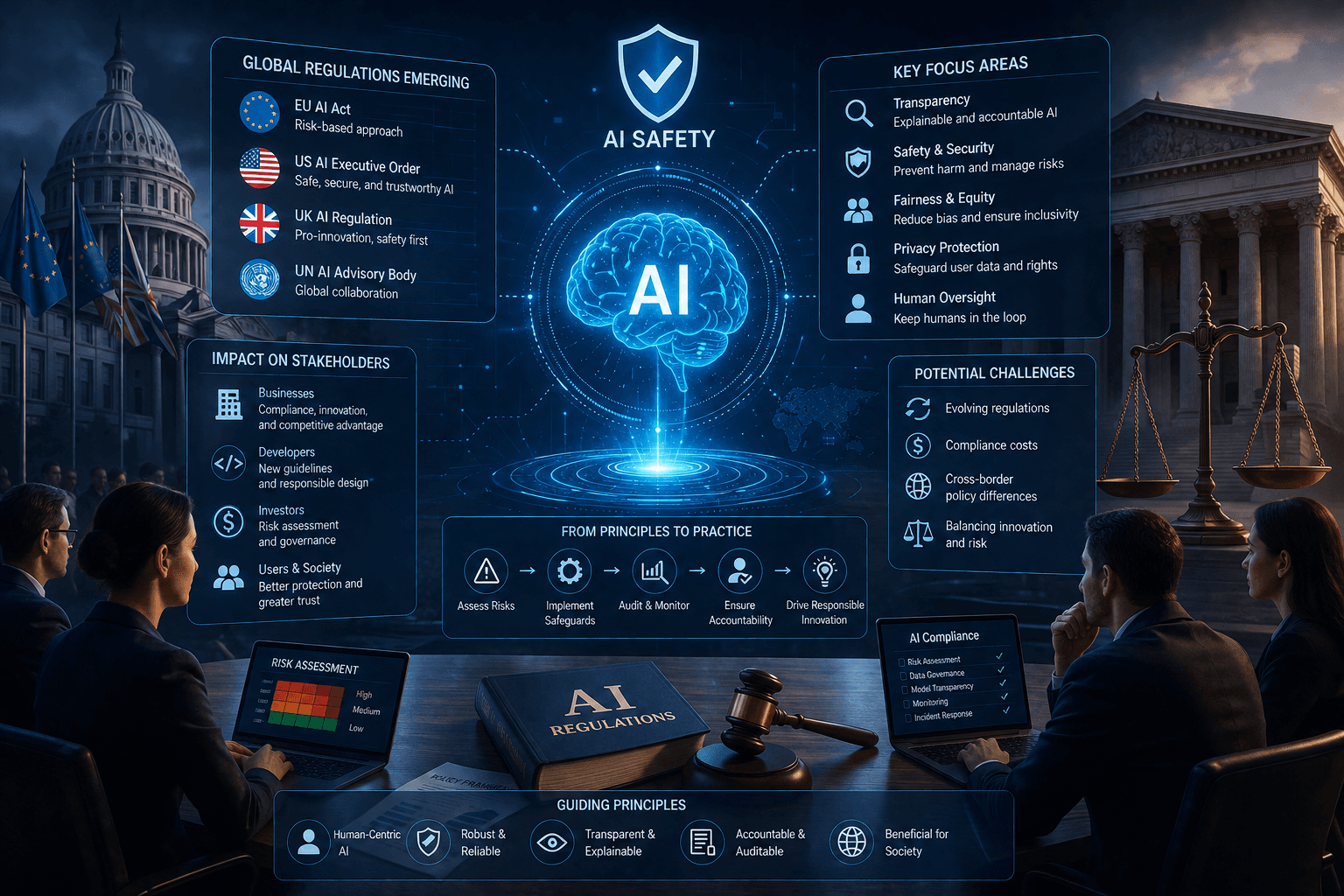
The global response to AI's rapid advancement has manifested in a variety of regulatory approaches. The European Union's AI Act stands out as a comprehensive, risk-based framework, categorizing AI applications based on their potential harm and imposing stricter requirements on high-risk systems. In the United States, initiatives like the AI Bill of Rights Blueprint offer a set of principles focused on protecting individuals from algorithmic harms, emphasizing safety, fairness, and transparency. Other nations are developing their own unique strategies, often focusing on specific sectors or ethical concerns. While approaches differ, common themes emerge: addressing algorithmic bias, ensuring data privacy, demanding transparency in AI decision-making, and establishing clear lines of accountability. International collaborations and standardization efforts are also underway, aiming to create a more harmonized global approach to AI governance and safety.
Impact on AI Development: Innovation vs. Compliance
The introduction of AI safety regulations presents a dual-edged sword for AI development. On one hand, these regulations can act as powerful catalysts for responsible innovation. By mandating ethical considerations from the outset, they encourage developers to build AI systems that are inherently safer, fairer, and more transparent. This focus on robust design principles can lead to higher quality, more trustworthy AI solutions. However, there's a legitimate concern that stringent regulations could stifle innovation, increase development costs, and create significant barriers to entry, particularly for smaller companies and startups. The challenge lies in finding the optimal balance. Implementing comprehensive AI governance frameworks, which outline clear policies, procedures, and ethical guidelines, is crucial. These frameworks help ensure that compliance doesn't become a bureaucratic hurdle but rather an integrated part of the development lifecycle, fostering a culture of responsible AI creation.
Challenges in AI Deployment: Meeting Regulatory Requirements
- Ensuring data privacy and security in compliance with regulations like GDPR, especially when dealing with sensitive AI training data.
- Identifying and mitigating algorithmic bias to prevent discriminatory outcomes in AI-driven decisions.
- Developing and implementing robust testing, validation, and continuous monitoring mechanisms to ensure AI systems perform as intended and remain safe over time.
- Achieving meaningful transparency and explainability, particularly for complex 'black box' models, to satisfy accountability requirements.
- Managing the lifecycle of AI models, including updates and decommissioning, in a regulatory-compliant manner.
Addressing these challenges requires a proactive and strategic approach. The need for explainable AI (XAI) techniques is paramount, allowing stakeholders to understand how AI systems arrive at their conclusions. This transparency is not just a regulatory demand but a fundamental aspect of building trust and enabling effective oversight.
The Role of AI Developers and Policymakers in Shaping the Future of AI Safety
Ensuring the safe and ethical development of AI is a shared responsibility. AI developers, researchers, and engineers are on the front lines, possessing the technical expertise to build and implement AI systems. They must embed safety and ethical considerations into the core of their work, moving beyond mere compliance to a proactive stance on responsible AI. Policymakers, in turn, play a critical role in creating clear, effective, and adaptable regulatory frameworks. This requires a deep understanding of the technology and its potential impacts. Crucially, collaboration and open dialogue between these two groups are essential. Continuous learning and adaptation are also vital, as AI technology evolves at an unprecedented pace. Regular feedback loops, pilot programs, and multi-stakeholder consultations can help ensure that regulations remain relevant and effective without unduly hindering progress.
Opportunities for AI Companies: Building Trust and Competitive Advantage
While navigating AI safety regulations can seem daunting, it also presents significant opportunities for forward-thinking AI companies. By proactively embracing and exceeding regulatory requirements, businesses can build profound trust with their users, customers, and the wider public. Demonstrating a commitment to ethical AI development and robust safety protocols can become a powerful competitive differentiator in a market increasingly concerned with responsible technology. Companies that invest in AI safety research and development, implement strong governance frameworks, and prioritize transparency are likely to gain a significant edge. This commitment not only mitigates risks but also enhances brand reputation and fosters long-term customer loyalty, positioning them as leaders in the responsible AI ecosystem.
The Long-Term Implications: Shaping the Future of AI
The long-term implications of AI safety regulations extend far beyond immediate compliance. These frameworks have the potential to fundamentally shape the trajectory of AI development and its integration into society. By setting clear ethical boundaries and safety standards, regulations can guide AI towards beneficial applications, mitigating risks of misuse or unintended harm. This could lead to a future where AI enhances human capabilities, drives economic growth, and solves complex global challenges, all within a framework of trust and accountability. Ethical considerations surrounding AI, such as consciousness, autonomy, and the potential for superintelligence, will continue to be debated and will likely necessitate ongoing evaluation and refinement of regulatory approaches. The goal is to foster an AI ecosystem that is not only innovative but also aligned with human values and societal well-being.
FAQ
- What is the main goal of AI safety regulations? The primary goal is to ensure that AI systems are developed and deployed in a way that is safe, ethical, fair, and transparent, minimizing potential risks and harms to individuals and society.
- How do regulations affect AI innovation? Regulations can guide innovation towards safer and more ethical paths, but overly burdensome rules might slow down development. The key is finding a balance that encourages responsible progress.
- What is Explainable AI (XAI)? XAI refers to methods and techniques that enable humans to understand and trust the results and output created by machine learning algorithms, crucial for regulatory compliance and accountability.
Conclusion: Embracing Responsible AI Development
The emergence of AI safety regulations marks a critical juncture in the evolution of artificial intelligence. As we've explored, these frameworks are essential for navigating the complexities of AI development and deployment, ensuring that innovation proceeds responsibly and ethically. By understanding the global regulatory landscape, addressing compliance challenges, and fostering collaboration between developers and policymakers, we can harness the transformative power of AI for the benefit of all. Embracing responsible AI development is not just a matter of compliance; it's a commitment to building a future where technology serves humanity.
Partner with BigOsoft for AI Solutions
Navigating the complexities of AI safety regulations and ensuring your AI projects are compliant requires expert guidance. BigOsoft offers cutting-edge AI development and consulting services, helping you build innovative, robust, and responsible AI solutions. Contact us today to discuss your AI project and discover how we can help you achieve your goals while adhering to the highest standards of safety and compliance. Explore our resources on AI safety and responsible AI development to learn more.