
Introduction: The Rise of AI Agent Ecosystems
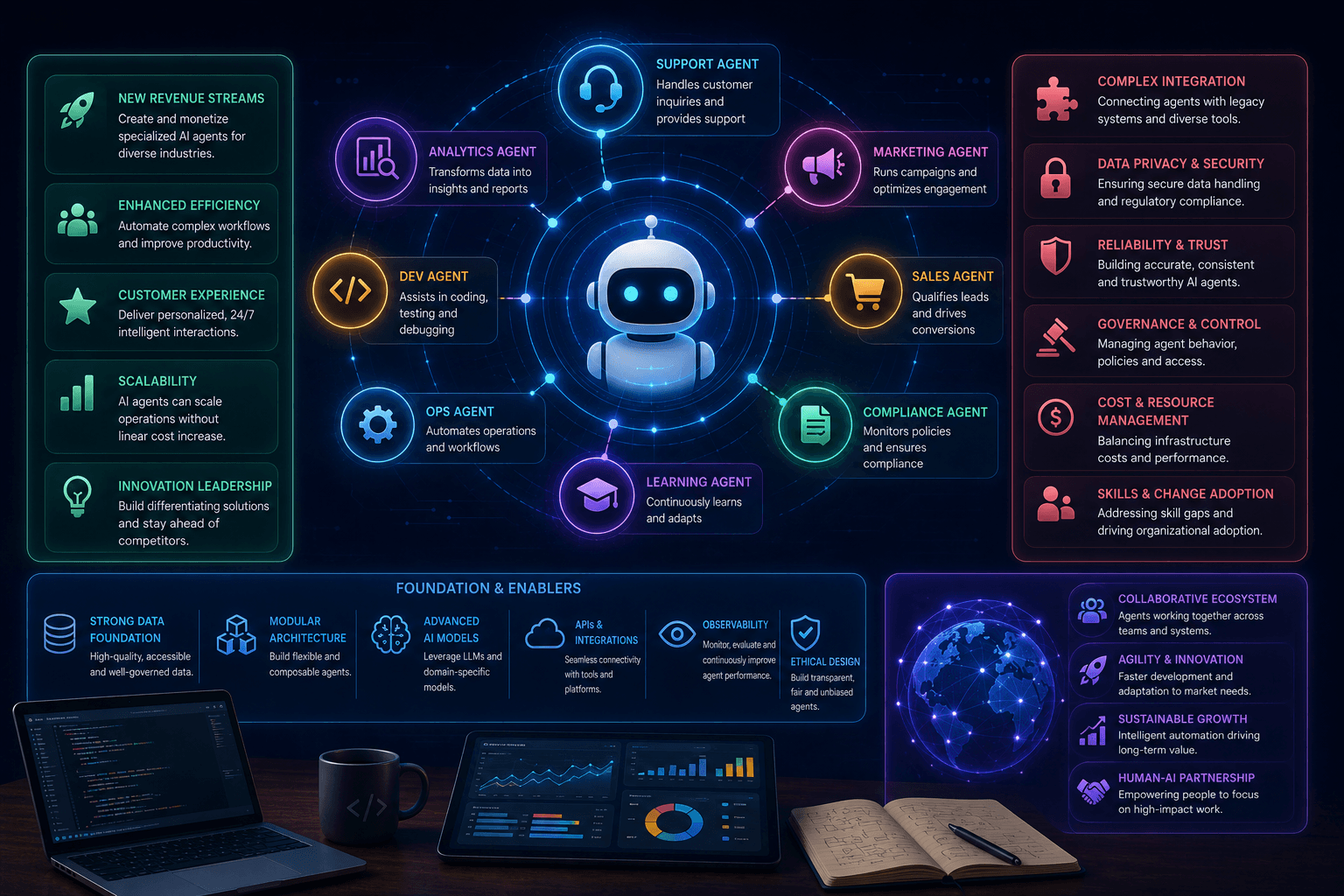
AI agents, sophisticated software entities capable of perceiving their environment, making decisions, and taking actions to achieve specific goals, are rapidly evolving. Their capabilities extend from simple task automation to complex problem-solving and collaborative endeavors. The concept of an AI agent ecosystem envisions a network of these intelligent agents interacting with each other and with existing systems, creating a powerful new paradigm for how software is developed, deployed, and utilized. This interconnected web of AI agents promises to revolutionize industries, driving unprecedented levels of efficiency and innovation. The growing interest and substantial investment in AI agent technologies underscore their transformative potential. This blog post aims to explore the significant opportunities and inherent challenges that building an AI agent ecosystem presents for software development companies.
Quick Answer
Building an AI agent ecosystem offers software development companies immense opportunities in platform creation, specialized agent development, integration services, marketplace building, and security solutions. However, it also presents challenges related to technical complexity, data privacy, ethical considerations, scalability, and interoperability. Success requires strategic focus, strong teams, and a commitment to ethical AI development.
Opportunities for Software Development Companies in the AI Agent Space
- Developing AI Agent Platforms: Creating robust, scalable infrastructure that allows AI agents to be built, deployed, managed, and monitored. This includes frameworks for agent communication, resource allocation, and lifecycle management.
- Building Specialized AI Agents: Focusing on developing agents tailored for specific niche applications and industries, such as healthcare diagnostics, financial analysis, customer service automation, or scientific research.
- Integrating AI Agents into Existing Software: Enhancing the functionality of current software applications by embedding AI agents to automate tasks, provide intelligent insights, and improve user experiences.
- Creating AI Agent Marketplaces: Developing platforms where developers can offer their specialized AI agents and users can discover and deploy them, fostering a vibrant ecosystem of AI-powered solutions.
- AI Agent Security Solutions: Addressing the unique security vulnerabilities and ethical considerations associated with AI agents, including data protection, bias mitigation, and secure agent communication protocols.
Key Benefits of Embracing AI Agent Ecosystems
- Increased Efficiency and Automation: AI agents can automate repetitive and complex tasks, streamline workflows, and reduce the need for manual intervention, leading to significant productivity gains.
- Enhanced Innovation: By analyzing vast datasets and identifying patterns, AI agents can foster new ideas, accelerate research and development, and lead to the creation of novel solutions and business models.
- Improved Customer Experience: AI agents can provide personalized, proactive, and 24/7 customer support, handle inquiries efficiently, and anticipate user needs, leading to higher customer satisfaction.
- New Revenue Streams: Developing and offering specialized AI agents, platforms, or integration services can open up entirely new avenues for revenue generation and business growth.
- Competitive Advantage: Companies that strategically embrace and develop within AI agent ecosystems can gain a significant edge by offering cutting-edge solutions and staying ahead of technological advancements.
Challenges in Building and Deploying AI Agent Ecosystems
- Technical Complexity: Developing sophisticated AI agents requires deep expertise in machine learning, distributed systems, and complex algorithms. Integrating these agents seamlessly into existing infrastructures also poses significant technical hurdles.
- Data Privacy and Security: AI agents often require access to sensitive data. Ensuring responsible data handling, robust security measures to prevent breaches, and compliance with privacy regulations like GDPR are paramount.
- Ethical Considerations: Addressing potential biases in AI algorithms, ensuring fairness in decision-making, maintaining transparency in agent behavior, and defining accountability for agent actions are critical ethical challenges.
- Scalability and Performance: Designing AI agent systems that can scale to handle millions of interactions and large datasets while maintaining optimal performance and responsiveness is a significant engineering challenge.
- Interoperability: Ensuring that different AI agents, developed by various teams or companies, can communicate, collaborate, and exchange information seamlessly is crucial for a thriving ecosystem.
Essential Technologies and Tools for AI Agent Development
- AI/ML Frameworks (TensorFlow, PyTorch): These foundational libraries provide the tools necessary for building, training, and deploying complex machine learning models that power AI agents.
- Cloud Computing Platforms (AWS, Azure, GCP): Scalable cloud infrastructure offers the computing power, storage, and managed services essential for developing and deploying AI agent ecosystems.
- APIs and SDKs: Well-defined Application Programming Interfaces (APIs) and Software Development Kits (SDKs) are vital for enabling AI agents to interact with other software systems and services.
- Natural Language Processing (NLP): Advanced NLP techniques are crucial for enabling AI agents to understand, interpret, and generate human language, facilitating more natural interactions.
- Robotics and Automation Tools: For agents interacting with the physical world, integration with robotics platforms and automation tools is necessary to translate digital decisions into physical actions.
Strategies for Success in the AI Agent Ecosystem
- Focus on Specific Use Cases: Identify high-value applications where AI agents can provide a clear and measurable benefit, rather than attempting to build general-purpose agents initially.
- Build a Strong Team: Assemble a multidisciplinary team with expertise in AI/ML, software engineering, cloud architecture, cybersecurity, and relevant domain knowledge.
- Prioritize Security and Ethics: Embed security and ethical considerations from the outset of development. Implement robust data governance, bias detection, and transparency mechanisms.
- Foster Collaboration: Engage with other companies, research institutions, and open-source communities to share knowledge, accelerate innovation, and promote interoperability.
- Embrace Continuous Learning: The field of AI is evolving rapidly. Foster a culture of continuous learning and adaptation to stay abreast of the latest advancements and integrate them into your strategies.
The Future of AI Agent Ecosystems
- Increased Autonomy and Intelligence: AI agents will become more self-sufficient, capable of learning, adapting, and making complex decisions with minimal human oversight.
- Wider Adoption Across Industries: Expect AI agents to become integral to operations in sectors like healthcare, finance, manufacturing, retail, and transportation, driving significant transformations.
- Integration with IoT and Edge Computing: AI agents will increasingly operate at the edge, closer to data sources, enabling real-time decision-making and reducing latency.
- Personalized AI Agents: Agents will become highly personalized, tailored to individual user preferences, behaviors, and needs, offering bespoke assistance and experiences.
- Emergence of New Architectures: Novel AI agent architectures and paradigms will likely emerge, pushing the boundaries of what intelligent systems can achieve.
FAQ
- What is an AI agent ecosystem? An AI agent ecosystem is a network of interconnected AI agents that can interact with each other and with software systems to perform tasks and achieve goals collaboratively.
- How can software companies benefit from AI agent ecosystems? Companies can benefit through increased efficiency, new revenue streams, enhanced innovation, improved customer experiences, and a stronger competitive advantage.
- What are the biggest challenges in developing AI agents? Key challenges include technical complexity, data privacy and security concerns, ethical considerations like bias, scalability issues, and ensuring interoperability between agents.
Conclusion: Navigating the AI Agent Revolution
The rise of AI agent ecosystems presents a profound shift for the software development landscape. While the opportunities for innovation, efficiency, and new business models are immense, the challenges related to technical complexity, security, ethics, and scalability are equally significant. Strategic planning, a focus on specific use cases, building expert teams, and fostering collaboration are crucial for success. By embracing the AI agent revolution proactively and thoughtfully, software development companies can position themselves at the forefront of this transformative wave, unlocking new potential for growth and shaping the future of intelligent automation.
CTA: Unlock the Power of AI with BigOsoft
Ready to explore the potential of AI agents for your business? Contact BigOsoft today to learn more about our AI development services. We offer custom AI solutions tailored to your specific needs, helping you leverage the power of AI for increased efficiency, innovation, and growth. Visit our website or contact us directly to schedule a consultation.