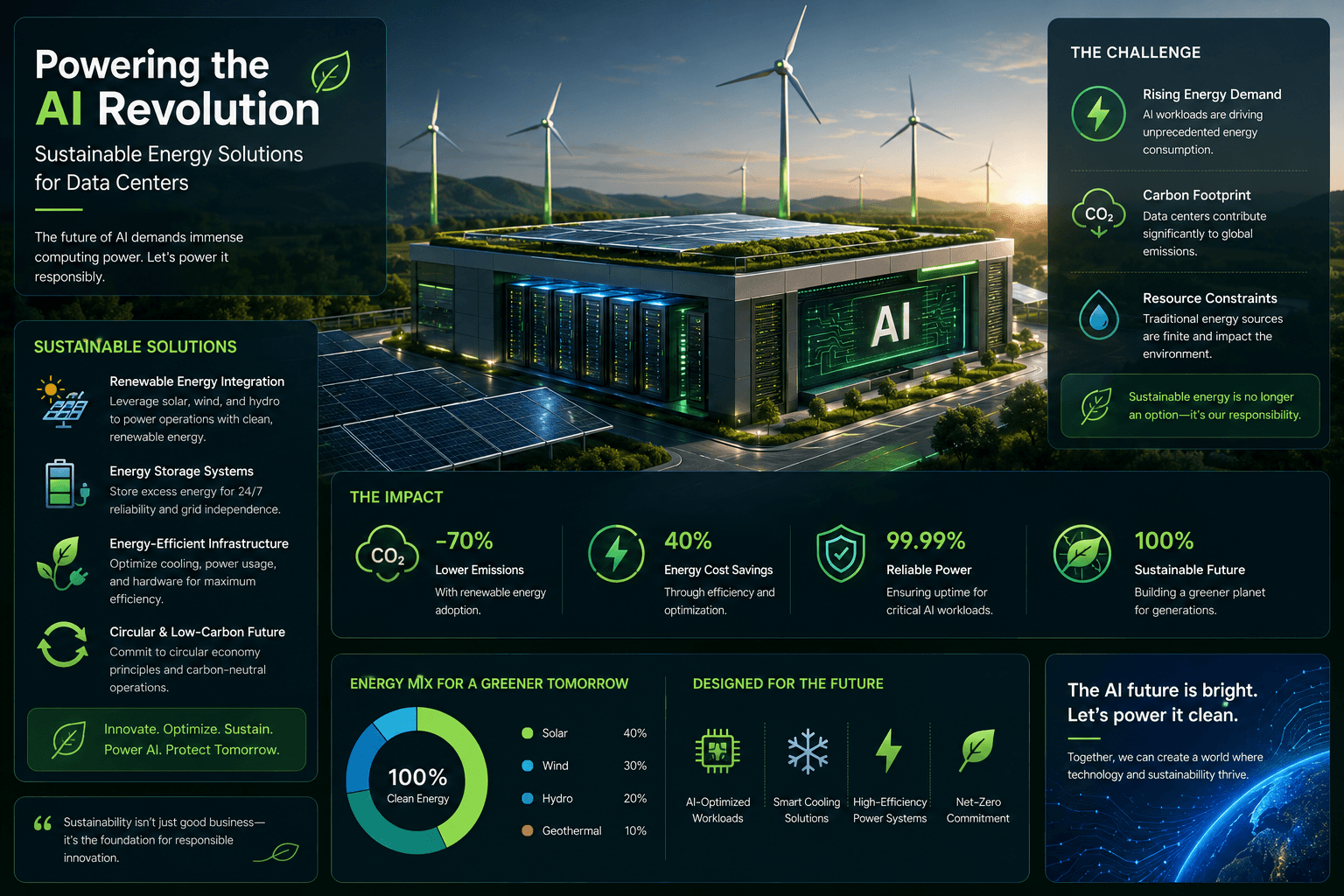

The artificial intelligence revolution is here, transforming industries and unlocking unprecedented capabilities. At the heart of this transformation lie data centers, the powerhouses that fuel AI's complex computations. However, this rapid advancement comes with a significant challenge: an insatiable appetite for energy. As AI workloads grow exponentially, so does the demand on data centers, pushing traditional infrastructure to its limits and raising critical questions about sustainability. Powering the AI revolution responsibly requires a fundamental shift towards sustainable energy solutions for data centers.
The Growing Energy Demand of AI Data Centers
AI, particularly deep learning and machine learning models, requires immense computational power. Training these models involves processing vast datasets through complex algorithms, consuming significant amounts of electricity. This exponential growth in AI workloads directly translates to an escalating energy demand from the data centers that host them. Traditional data centers, often designed for more static workloads, are struggling to keep up with the dynamic and power-intensive requirements of AI. The environmental impact of relying heavily on fossil fuels to meet this demand is substantial, contributing to carbon emissions and climate change. Furthermore, the escalating energy consumption leads to rising operational costs, impacting the economic viability of AI initiatives.
Challenges in Transitioning to Sustainable Energy
- The intermittency of renewable energy sources like solar and wind presents a challenge, as they are not always available when needed.
- Geographic limitations and resource availability can restrict the deployment of certain renewable energy technologies.
- The high upfront investment costs for establishing renewable energy infrastructure can be a significant barrier.
- Integrating renewable energy sources into existing power grids poses challenges related to stability and seamless operation.
- Ensuring a consistent and reliable power supply is paramount for critical AI operations, which can be difficult with fluctuating energy sources.
Innovative Sustainable Energy Solutions for AI Data Centers
Fortunately, a range of innovative solutions are emerging to address these challenges and enable sustainable AI data centers. On-site solar and wind power generation allows data centers to produce their own clean energy, reducing reliance on the grid. Advanced battery storage systems are crucial for buffering energy, storing excess renewable power for use during peak demand or when generation is low. Geothermal energy offers a stable and consistent source for both cooling and power generation in suitable locations. Hydrogen fuel cells are gaining traction as a clean backup power solution and even a primary energy source, offering high energy density and zero emissions at the point of use. Implementing microgrids provides localized energy management and enhances resilience, allowing data centers to operate independently or in conjunction with the main grid.
Optimizing Data Center Design for Energy Efficiency
Beyond energy sources, optimizing data center design is critical for minimizing energy consumption. Advanced cooling technologies, such as liquid cooling and free cooling (utilizing ambient air temperatures), significantly reduce the energy needed for thermal management. Server virtualization and workload consolidation allow for fewer physical servers to handle the same amount of processing, leading to substantial power savings. AI-powered energy management systems can dynamically optimize power usage based on real-time demand and energy availability. Careful planning of server placement and airflow management ensures efficient cooling and prevents hot spots. Finally, the selection of energy-efficient hardware and components throughout the data center infrastructure plays a vital role in reducing the overall energy footprint.
The Role of Policy and Incentives in Driving Sustainability
Government policies and financial incentives are powerful catalysts for driving the adoption of sustainable energy solutions in data centers. Regulations and carbon pricing mechanisms can incentivize organizations to reduce their carbon footprint. Tax incentives and subsidies for renewable energy adoption make the transition more economically attractive. Establishing industry standards and certifications for sustainable data centers provides a framework for best practices and promotes accountability. Public-private partnerships can accelerate the development of necessary renewable energy infrastructure. Furthermore, promoting energy efficiency through updated building codes and regulations can ensure that new data center constructions are inherently more sustainable.
Case Studies: Sustainable AI Data Center Success Stories
Numerous organizations are already demonstrating the viability and benefits of sustainable AI data centers. We see examples of data centers powered entirely by renewable energy sources, often through a combination of on-site generation and power purchase agreements. Innovative energy-saving technologies are being deployed, from advanced cooling systems to intelligent power management. The quantifiable results are compelling: significant reductions in carbon footprint, lower operational costs due to decreased energy consumption, and enhanced brand reputation. These success stories offer valuable lessons learned and provide best practices for other organizations looking to embark on their own sustainability journey.
Future Trends in Sustainable AI Data Centers
The future of sustainable AI data centers is dynamic and promising. We can expect deeper integration of AI and machine learning for even more sophisticated energy optimization within data centers themselves. The development of new, more efficient energy storage technologies will further enhance the reliability of renewable sources. Increased adoption of distributed energy resources will create more resilient and localized power systems. The emergence of carbon-neutral and even carbon-negative data centers, which actively remove CO2 from the atmosphere, is on the horizon. A strong focus on circular economy principles for data center hardware, emphasizing reuse, refurbishment, and recycling, will also be crucial.
Conclusion: Building a Sustainable Future for AI
The imperative of transitioning to sustainable energy for AI data centers cannot be overstated. The environmental benefits of reduced carbon emissions are critical for combating climate change, while the economic advantages of lower operational costs and increased energy efficiency are undeniable. Achieving this transition requires a concerted effort involving collaboration between technology providers, data center operators, policymakers, and energy companies. Innovation in renewable energy, storage, and data center design will be key drivers. By embracing sustainable practices, data centers can not only power the AI revolution but also play a pivotal role in driving the broader green revolution towards a healthier planet.
Ready to Power Your AI with Sustainable Solutions?
Learn how BigOsoft can help you build and manage energy-efficient and sustainable AI data centers. Contact us today for a consultation and discover how our expertise can drive your sustainability goals. Explore our services for data center design, energy optimization, and renewable energy integration. Contact us to learn more about our AI data center solutions.