
Introduction: The Untapped Potential of Game Data
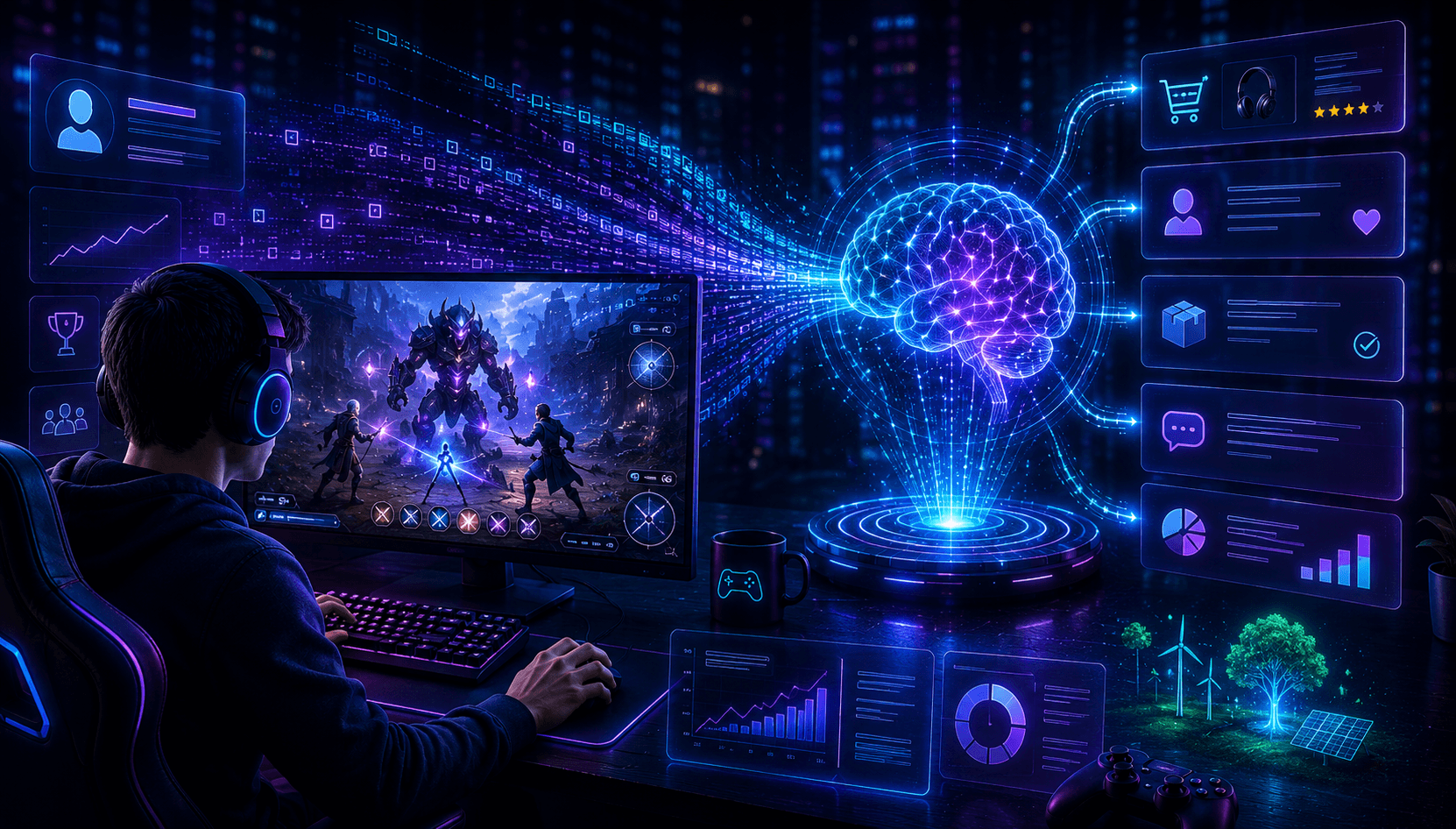
Video games, more than just entertainment, are colossal engines of data generation. Every click, every decision, every moment spent in a virtual world contributes to a rich tapestry of information. This burgeoning volume of game data is increasingly recognized as a powerful resource for training sophisticated artificial intelligence models. This blog post delves into how game companies can effectively harness this data, exploring its benefits for both enhancing game development and propelling broader AI research forward. By understanding and utilizing this unique data source, we can unlock new frontiers in intelligent systems.
Quick Answer
Game data offers a unique and valuable resource for AI training due to its controlled environments, vast scale, and cost-effectiveness. By analyzing player behavior, game states, and AI agent interactions, companies can develop more intelligent and adaptive AI systems, leading to improved game experiences and innovations in fields beyond gaming. Leveraging this data is key to advancing the future of intelligent systems.
The Data Goldmine: Types of Game Data Available
The world of gaming generates an astonishing variety of data, each type offering unique insights for AI development. Player behavior data captures the essence of human interaction within the game, detailing movement patterns, strategic choices, social interactions, and engagement levels. Game state data provides a snapshot of the virtual environment at any given moment, including object positions, character attributes, environmental conditions, and dynamic events. AI agent data logs the decision-making processes, learning curves, and performance metrics of non-player characters (NPCs) or AI-controlled entities. Finally, telemetry data offers crucial technical insights, encompassing performance metrics, frame rates, error logs, and network latency, which are vital for understanding system stability and user experience. The richness and variety of this data create a fertile ground for training robust AI models.
Why Game Data is Ideal for AI Training
- Controlled environments and simulated scenarios: Games provide highly controllable virtual worlds where specific scenarios can be created and repeated, allowing for consistent data collection and testing of AI algorithms.
- Large-scale datasets readily available: The sheer popularity of many video games means that massive datasets are generated organically, often far exceeding what could be collected through other means.
- Cost-effectiveness compared to real-world data collection: Gathering data from real-world scenarios, especially for complex tasks like autonomous driving or robotics, can be prohibitively expensive. Game data offers a significantly more economical alternative.
- Ethical considerations: While privacy is always a concern, game data is generally less sensitive than personal data collected in other domains, simplifying ethical compliance and data handling.
Applications of Game Data in AI Development
The applications of game data in AI development are vast and transformative. Reinforcement learning agents can be trained using game environments to achieve complex autonomous behaviors, learning to navigate, strategize, and interact effectively. This also enables the development of more realistic and adaptive AI opponents that can challenge human players in sophisticated ways. Beyond improving gameplay, game data can be used to personalize player experiences, tailoring challenges, rewards, and content to individual preferences. Predictive models can analyze player behavior to forecast churn rates, allowing developers to proactively address issues and optimize game design for better retention. Furthermore, the realistic simulations offered by game engines, powered by AI trained on game data, are increasingly valuable for training robots and developing solutions in fields like urban planning, disaster response, and scientific research.
Challenges and Considerations When Using Game Data
While the potential is immense, utilizing game data for AI training is not without its challenges. Data bias and representation issues can arise if the player base or the game's design doesn't reflect the diversity needed for broader AI applications. Ensuring data privacy and security remains paramount, even with less sensitive data, requiring robust anonymization and access control measures. The sheer volume and complexity of game data necessitate significant data cleaning and preprocessing efforts to make it suitable for AI training. Scalability and infrastructure challenges emerge when dealing with terabytes or petabytes of data, requiring powerful computing resources and efficient data pipelines. To overcome these limitations, synthetic data generation techniques are increasingly employed to augment real datasets, creating diverse and representative training examples.
Case Studies: Companies Leveraging Game Data for AI
Numerous companies are already demonstrating the power of game data in AI. Major game studios like Riot Games and Blizzard Entertainment extensively use player telemetry and behavior data to refine game balance, detect cheating, and improve player experience. AI research labs, often in partnership with game developers, have used games like StarCraft II and Dota 2 as testbeds for training advanced reinforcement learning agents, achieving superhuman performance. Companies like DeepMind have famously used games as a proving ground for their AI breakthroughs. While specific quantifiable results can be proprietary, the outcomes often include significantly improved AI opponent capabilities, increased player engagement through personalized experiences, and more efficient game development cycles. These successes highlight the tangible benefits of integrating game data into AI strategies.
Future Trends: The Convergence of Gaming and AI
The future promises an even deeper integration of gaming and AI. We are moving towards AI-driven game design and development, where AI assists in creating levels, characters, and narratives. Generative AI is poised to revolutionize game content creation, enabling dynamic and unique experiences for every player. AI-powered esports analytics will provide deeper insights into player performance and team strategies, aiding in training and broadcasting. The rise of the metaverse further amplifies the role of AI in creating persistent, immersive, and interactive virtual worlds, where AI will manage complex ecosystems and drive dynamic NPC behaviors. This convergence will redefine entertainment and create new paradigms for human-computer interaction.
FAQ
- What kind of AI models can be trained with game data? Game data is excellent for training reinforcement learning agents, predictive models for player behavior, and generative models for content creation.
- Is game data sensitive? While generally less sensitive than personal financial or health data, game data can still contain user identifiers and behavioral patterns that require careful privacy management.
- How can small game studios benefit from using their data? Even smaller studios can gain valuable insights by analyzing player engagement, identifying pain points, and optimizing game mechanics, leading to better player retention and monetization.
- What are the biggest challenges in using game data? Key challenges include data bias, ensuring privacy, cleaning and preprocessing large datasets, and the computational resources required for training complex AI models.
Conclusion: Unlock the Power of Your Game Data with BigOsoft
The immense potential of video game data for advancing artificial intelligence is undeniable. From creating more engaging gameplay to driving innovation in fields far beyond gaming, the insights locked within player interactions and virtual worlds are a powerful asset. By understanding and effectively leveraging this data, companies can achieve significant breakthroughs in AI development, leading to enhanced products and services. BigOsoft specializes in helping businesses harness the full value of their data. Contact us today to learn how we can help you unlock the power of your game data and build the next generation of intelligent systems. Visit our website or schedule a consultation to discuss your AI ambitions.