
Introduction: The Evolving Landscape of Web3 Security
The world of Web3 promises a decentralized, user-centric internet, powered by blockchain technology. This paradigm shift offers unprecedented opportunities for innovation, transparency, and user empowerment. However, as Web3 adoption accelerates, so does the sophistication and frequency of security threats. From decentralized finance (DeFi) protocols to non-fungible token (NFT) marketplaces, the digital frontier is increasingly becoming a target for malicious actors. A significant concern within this evolving landscape is the rise of insider trading and the exploitation of inherent vulnerabilities. These breaches not only result in substantial financial losses but also erode user trust and question the integrity of decentralized systems. The Polymarket case serves as a stark reminder of these risks, highlighting the critical need for robust security measures in Web3.
Quick Answer: Web3 security breaches, including insider trading, occur due to vulnerabilities in smart contracts, decentralized exchanges, and governance mechanisms. These exploits can lead to significant financial losses and damage trust. Proactive measures like rigorous auditing, robust access controls, and real-time monitoring are crucial for safeguarding Web3 platforms.
Understanding the Risks: Insider Trading in Web3
Insider trading, traditionally associated with centralized stock markets, presents a unique and complex challenge in the Web3 space. In decentralized environments, the lines between legitimate information and privileged access can blur. Insider trading can occur when individuals with privileged information about upcoming protocol changes, token listings, or exploit vulnerabilities use this knowledge to make profitable trades before the information becomes public. The inherent transparency of blockchains, while a core tenet of Web3, can paradoxically make it harder to detect illicit activities if the actors are sophisticated. Detecting and preventing such activities requires advanced analytics and a deep understanding of on-chain and off-chain behaviors. The potential impact is severe: it undermines market fairness, discourages legitimate participation, and can lead to significant capital flight as users lose confidence in the platform's integrity. Tactics can range from front-running transactions to exploiting information asymmetry regarding future protocol upgrades or token burns.
Polymarket Case Study: A Deep Dive
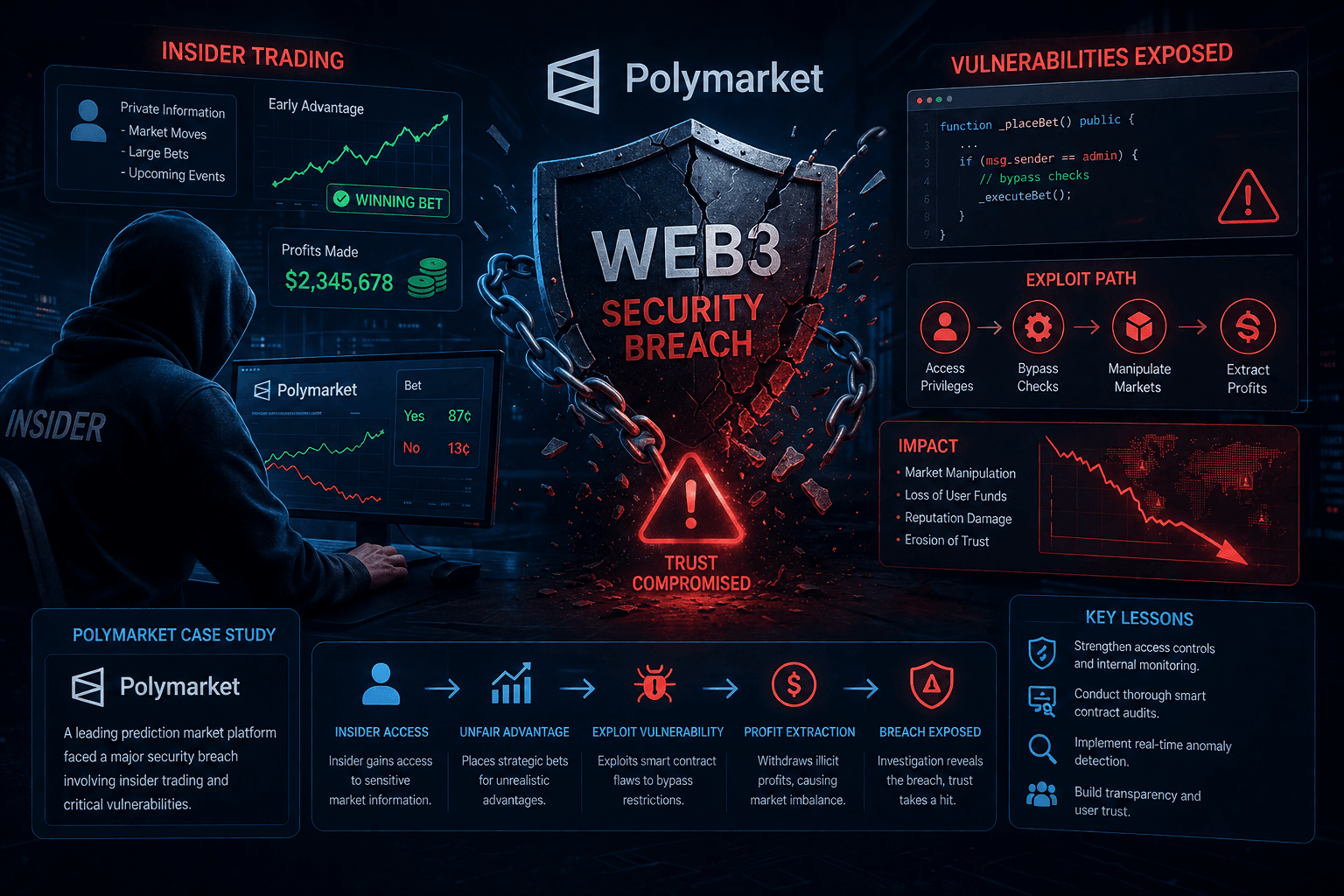
The Polymarket incident, while not a direct insider trading case in the traditional sense, illuminated critical vulnerabilities within prediction markets and decentralized platforms. Polymarket, a decentralized prediction market, faced scrutiny when a user allegedly profited from non-public information regarding the US presidential election outcome. The user reportedly placed a large bet on a specific outcome before it was widely known or confirmed, exploiting the platform's structure. This event highlighted how information asymmetry, even if not strictly 'insider' in a corporate sense, can be leveraged for profit in decentralized systems. The specific vulnerabilities exploited related to the platform's reliance on external data feeds and the speed at which information could be acted upon. While Polymarket has mechanisms to address such issues, the incident demonstrated the challenges in maintaining market integrity when real-world events influence decentralized markets. The quantifiable impact included reputational damage and calls for enhanced governance and dispute resolution mechanisms within prediction markets.
Common Web3 Security Vulnerabilities
- Smart contract vulnerabilities: Flaws like reentrancy attacks, integer overflows, and unchecked external calls can lead to the theft of funds or manipulation of contract logic.
- Decentralized exchange (DEX) exploits: Vulnerabilities in Automated Market Makers (AMMs) or liquidity pools can be exploited for arbitrage or direct theft.
- Wallet security flaws: Compromised private keys, phishing attacks, and insecure wallet implementations can lead to the loss of user assets.
- Oracle manipulation: Decentralized oracles, which provide external data to smart contracts, can be manipulated, leading to incorrect contract execution and financial losses.
- Governance vulnerabilities: Flaws in decentralized governance mechanisms can be exploited to pass malicious proposals or hijack control of a protocol.
Preventative Measures: Strengthening Your Web3 Platform
- Rigorous smart contract auditing and testing: Thorough code reviews and formal verification by reputable third-party auditors are essential.
- Implementing robust access controls and permission management: Limiting administrative privileges and employing multi-signature wallets for critical operations.
- Utilizing multi-signature wallets and hardware wallets: Enhancing the security of treasury funds and sensitive operational accounts.
- Employing real-time monitoring and anomaly detection systems: Continuously scanning for suspicious transaction patterns and contract behavior.
- Establishing clear governance policies and procedures: Defining rules for proposal submission, voting, and execution to prevent malicious takeovers.
- Regular security awareness training for developers and users: Educating teams about common threats and best practices for secure development and interaction.
The Role of Audits and Penetration Testing
Security audits and penetration testing are cornerstones of robust Web3 security. Regular audits by reputable third-party security firms provide an independent assessment of smart contract code, protocol logic, and overall system security. These audits help identify vulnerabilities before they can be exploited by malicious actors. Penetration testing goes a step further by simulating real-world attacks to uncover weaknesses that might be missed during static code reviews. Selecting the right audit firm involves considering their experience with similar projects, their methodology, and their reputation within the blockchain security community. Best practices include engaging auditors early in the development lifecycle, providing them with comprehensive documentation, and diligently responding to and remediating identified findings. A proactive approach to audits and testing significantly reduces the risk of costly breaches and builds user confidence.
Future Trends in Web3 Security
- Emerging security threats: As Web3 evolves, new attack vectors will emerge, requiring constant vigilance and adaptation.
- Advancements in security technologies: Innovations like zero-knowledge proofs and advanced cryptography will play a larger role in enhancing privacy and security.
- The role of AI and machine learning: AI/ML can be leveraged for sophisticated anomaly detection, threat prediction, and automated vulnerability analysis.
- Collaboration and information sharing: Open communication and sharing of threat intelligence within the Web3 community are crucial for collective defense.
Conclusion: Securing the Future of Web3
The journey towards a decentralized future is fraught with security challenges, including the persistent threat of insider trading and various protocol vulnerabilities. The Polymarket case underscores the need for constant vigilance and robust security practices. By implementing rigorous auditing, employing strong access controls, and fostering a security-first mindset, developers and platform operators can significantly mitigate risks. The potential of Web3 is immense, but its realization hinges on our ability to build and maintain secure, trustworthy ecosystems. Prioritizing Web3 security is not just a technical requirement; it's fundamental to achieving the decentralized vision. Addressing these vulnerabilities proactively is key to unlocking the full potential of this transformative technology.
FAQ
- What is insider trading in the context of Web3?
- How do smart contract vulnerabilities differ from traditional software bugs?
- Why is penetration testing important for Web3 platforms?
- Can decentralized systems truly be secure against insider threats?
Protect Your Web3 Platform with BigOsoft. Learn how BigOsoft's comprehensive security solutions can help you safeguard your Web3 platform against insider trading, smart contract exploits, and other critical vulnerabilities. Contact us today for a free consultation and take the first step towards a more secure decentralized future.