

Introduction: The Generative AI Promise and Enterprise Realities
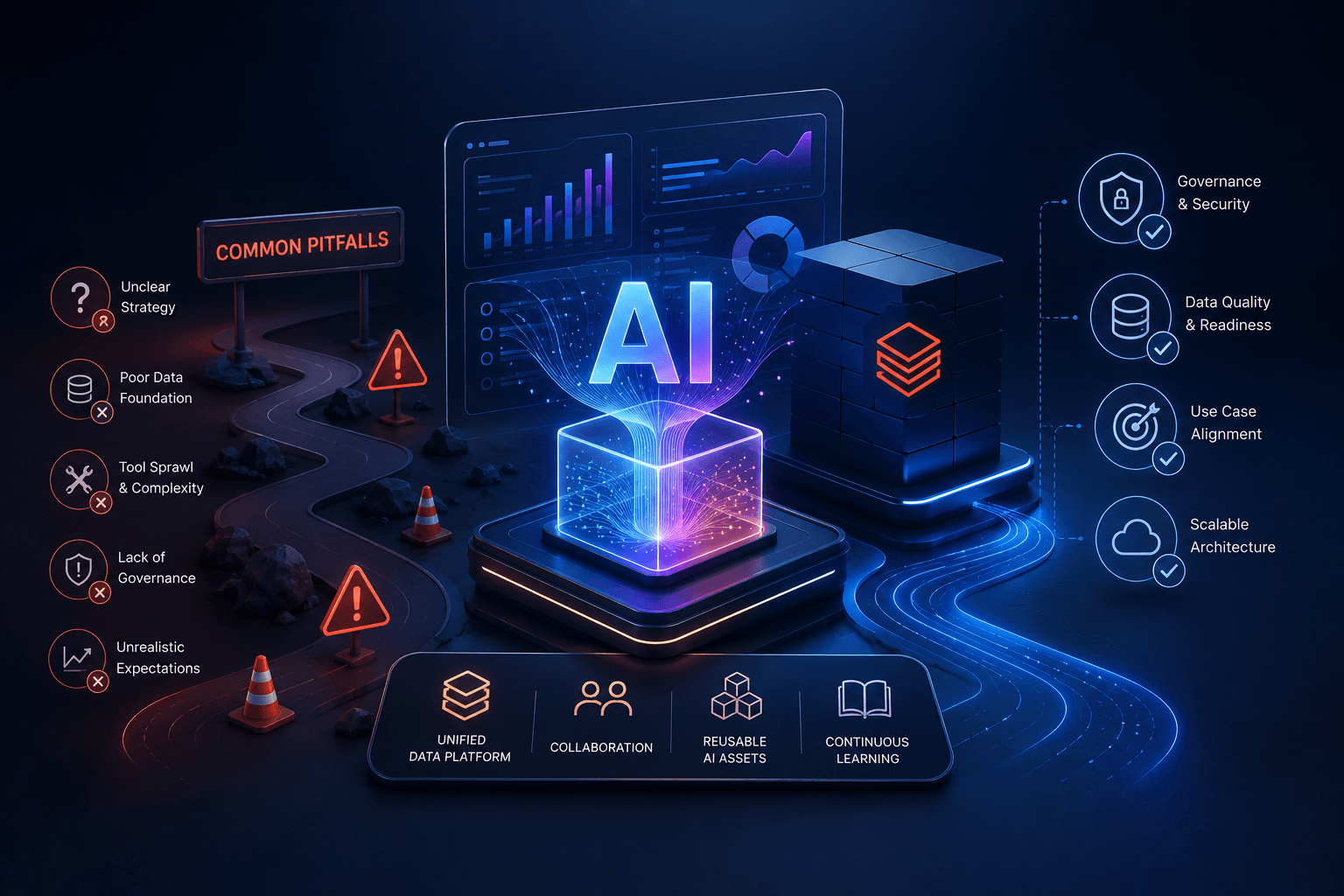
Generative AI is no longer a futuristic concept; it's a powerful engine poised to revolutionize how businesses operate. From automating customer service interactions and generating marketing copy to accelerating software development, the potential for transformative impact is immense. However, the path from the initial excitement surrounding generative AI to successful, value-generating enterprise adoption is often fraught with challenges. The gap between the dazzling demonstrations and the practical realities of implementation can be significant, leading many organizations to stumble. To navigate this complex terrain, we can draw valuable lessons from the experiences of leading companies. Databricks, a prominent player in the data and AI space, offers a compelling case study, providing insights into both the triumphs and the pitfalls of implementing AI solutions at scale. Understanding these lessons is crucial for any enterprise looking to harness the power of generative AI effectively.
Quick Answer
Successfully adopting generative AI in an enterprise requires a strategic approach focused on clear business objectives, robust data governance, solid infrastructure, iterative development, ethical considerations, and informed build vs. buy decisions. Learning from pioneers like Databricks helps avoid common pitfalls and ensures a higher return on investment.
Lesson 1: Defining Clear Business Objectives and ROI Metrics
The most common pitfall in adopting new technologies, especially transformative ones like generative AI, is the allure of the 'shiny object.' Without a clear understanding of what problem you're trying to solve or what business value you aim to create, AI initiatives can quickly become expensive, unfocused experiments. The first crucial lesson is to anchor your generative AI strategy in specific, measurable business goals. What tangible improvements are you seeking? Examples abound: enhancing customer service through intelligent chatbots that can handle complex queries, streamlining content creation for marketing and internal communications, or accelerating code generation and debugging for development teams. Once objectives are defined, establishing Key Performance Indicators (KPIs) becomes paramount. How will you measure success? This could involve tracking metrics like reduced customer service resolution times, increased content output volume and quality, or faster software release cycles. Focusing on practical applications with demonstrable value ensures that your AI investments translate into real business outcomes, rather than just technological novelties.
Lesson 2: Data Governance and Quality are Paramount
Generative AI models, particularly large language models (LLMs), are incredibly powerful, but their capabilities are fundamentally limited by the data they are trained on. 'Garbage in, garbage out' is an adage that holds particularly true in the realm of AI. Therefore, robust data governance and a relentless focus on data quality are not optional; they are foundational requirements. This involves establishing clear policies for data management, ensuring data security, maintaining compliance with regulations (like GDPR or CCPA), and guaranteeing data integrity. Before feeding data into AI models, significant effort must be dedicated to cleaning, preparing, and accurately labeling it. This process is often the most time-consuming but also the most critical for model performance. Furthermore, organizations must proactively address potential issues of data bias and fairness. Biased training data can lead to AI outputs that perpetuate or even amplify societal inequalities, resulting in reputational damage and unintended negative consequences. Implementing rigorous data validation and bias detection mechanisms is essential for responsible AI development.
Lesson 3: Building a Robust AI Infrastructure and Talent Pool
Training and deploying sophisticated generative AI models demand significant computational resources. Enterprises need to consider their infrastructure requirements, including scalable compute power (GPUs are often essential), ample storage for vast datasets, and high-speed networking. Choosing the right AI platform and tools is also a critical decision. Will you leverage cloud-based solutions, on-premises infrastructure, or a hybrid approach? The answer often depends on existing IT investments, security needs, and scalability requirements. Equally important is cultivating a skilled talent pool. Building and maintaining AI systems requires a multidisciplinary team, including data scientists who can develop and tune models, data engineers who manage the data pipelines, and AI specialists who understand deployment and operationalization. Attracting, retaining, and continuously training this talent is a strategic imperative. Investing in internal training programs or partnering with external experts can bridge skill gaps and foster an AI-ready culture within the organization.
Lesson 4: Iterative Development and Continuous Improvement
The journey of AI adoption is rarely a straight line. A 'big bang' approach, attempting to deploy a fully-fledged AI solution from the outset, is often destined for failure. Instead, the most successful implementations follow an iterative development process. Start small with manageable pilot projects that target specific, well-defined problems. This allows teams to learn, adapt, and demonstrate value quickly. Adopting an agile development methodology is crucial for refining models based on real-world performance and user feedback. Establishing robust feedback loops is essential for continuously monitoring AI models in production. Are they performing as expected? Are there emerging biases or performance degradations? Techniques like A/B testing can be invaluable for comparing different model versions or configurations, optimizing performance, and ensuring that the AI solution evolves to meet changing business needs and user expectations.
Lesson 5: Addressing Ethical Considerations and Responsible AI
The power of generative AI comes with significant ethical responsibilities. Enterprises must proactively address the potential implications, including issues of algorithmic bias, data privacy violations, and security vulnerabilities. Developing and implementing a comprehensive responsible AI framework is no longer a 'nice-to-have' but a necessity. This framework should outline clear guidelines for AI development and deployment, emphasizing fairness, accountability, and transparency. Ensuring explainability in AI decision-making, where possible, helps build trust and allows for better debugging and auditing. Ultimately, building trust with customers, employees, and regulators through ethical AI practices is paramount for long-term success and sustainability. Ignoring these aspects can lead to severe reputational damage and legal repercussions.
Lesson 6: Buy vs. Build: Making the Right Choice for Your Enterprise
A fundamental decision for any enterprise embarking on generative AI is whether to build solutions in-house or leverage existing tools and platforms. Building from scratch offers maximum customization and control but requires significant investment in talent, infrastructure, and time. Using pre-trained models via APIs or third-party platforms can offer faster time-to-market and lower initial costs, but may involve limitations in customization and potential vendor lock-in. Factors to consider include your organization's existing expertise, the specific customization requirements of your use case, budget constraints, and the urgency of deployment. Often, a hybrid approach proves most effective. This might involve fine-tuning powerful pre-trained models with your enterprise-specific data to achieve a balance between leveraging cutting-edge AI capabilities and tailoring solutions to your unique business context. Carefully evaluating these options ensures a strategic and cost-effective path forward.
Conclusion: Accelerating Enterprise AI Adoption with a Strategic Approach
The journey to successful generative AI adoption is complex, but the potential rewards are substantial. By internalizing the lessons learned from pioneers like Databricks—focusing on clear business objectives, prioritizing data quality and governance, building robust infrastructure and talent, embracing iterative development, upholding ethical standards, and making informed 'buy vs. build' decisions—enterprises can significantly de-risk their AI initiatives. A strategic, data-driven approach is key to navigating the challenges and unlocking the transformative power of generative AI. As the technology continues to evolve at a rapid pace, organizations that adopt a proactive and adaptable mindset will be best positioned to thrive in the AI-driven future.
Frequently Asked Questions
- **What is the biggest challenge in enterprise generative AI adoption?** The biggest challenge is often bridging the gap between the hype and practical implementation, which includes defining clear business value, ensuring data quality, and managing ethical considerations.
- **How important is data quality for generative AI?** Data quality is paramount. Generative AI models learn from data, so poor quality or biased data will lead to inaccurate, unreliable, or unfair outputs.
- **Should enterprises build or buy generative AI solutions?** It depends on the specific use case, available resources, and strategic goals. Hybrid approaches, like fine-tuning pre-trained models, often offer a good balance.
- **What role does infrastructure play in AI adoption?** Robust infrastructure, including compute, storage, and networking, is essential for training and deploying complex AI models efficiently and at scale.
Unlock the Power of Generative AI with BigOsoft
Ready to transform your business with the power of generative AI? Navigating the complexities of AI adoption requires expertise and a strategic roadmap. BigOsoft offers comprehensive consulting and implementation services designed to help your enterprise successfully integrate generative AI solutions. We partner with you to define clear objectives, build robust data strategies, develop scalable infrastructure, and ensure responsible AI deployment. Contact us today to learn how BigOsoft can help you harness the full potential of generative AI and achieve your business goals.