

Introduction: The Rise of AI Startup Acquisitions
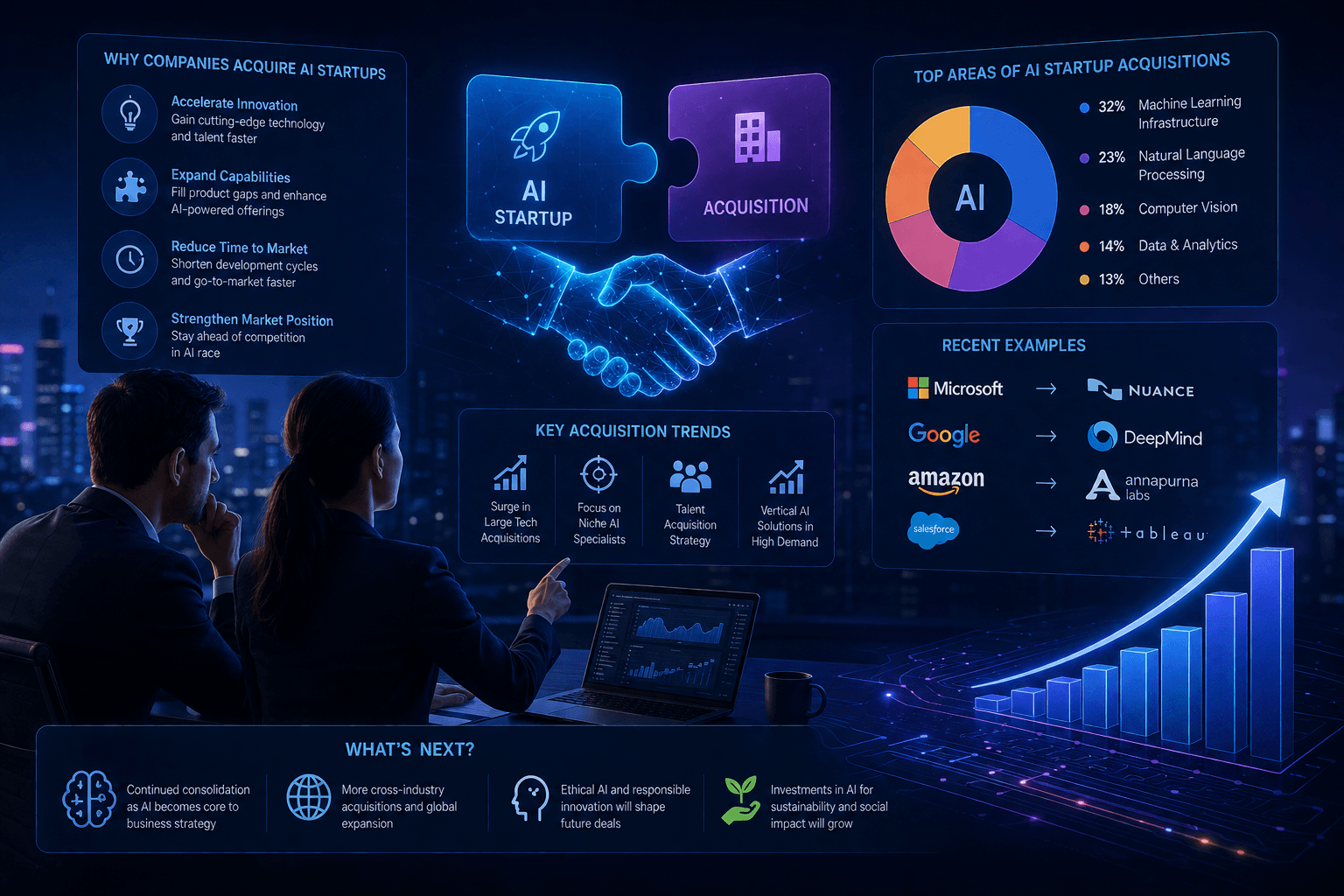
The landscape of artificial intelligence is rapidly evolving, and a significant indicator of this dynamism is the increasing frequency of AI startup acquisitions. Established tech giants and forward-thinking corporations are actively seeking to bolster their AI capabilities through strategic buyouts. This trend isn't just about acquiring technology; it's about acquiring talent, market share, and a competitive edge in a field that promises to redefine industries. Companies are increasingly choosing to acquire specialized AI startups rather than investing the time and resources to build similar capabilities from scratch, a strategic decision driven by the need for speed and specialized expertise in the fast-paced AI race. Understanding the nuances of AI startup acquisitions is crucial for anyone involved in this burgeoning sector.
Quick Answer
AI startup acquisitions are accelerating as large companies seek specialized talent, proprietary technology, and rapid market entry. These deals are driven by the strategic need to gain a competitive advantage in the AI race, leading to market consolidation and influencing the future trajectory of AI development and innovation.
Key Drivers Behind AI Startup Acquisitions
- Talent Acquisition: Access to skilled AI engineers and researchers is paramount. Top AI talent is scarce, making startups with proven teams highly attractive acquisition targets.
- Technology Acquisition: Gaining proprietary AI algorithms, unique datasets, and innovative solutions that can be integrated into existing product lines or used to develop new ones.
- Market Expansion: Entering new markets or customer segments quickly by acquiring startups that already have a foothold and established user base.
- Competitive Advantage: Staying ahead of competitors in the AI race by acquiring cutting-edge technologies and preventing rivals from doing the same.
Notable AI Startup Acquisitions: Case Studies
Examining recent high-profile acquisitions provides valuable insights into the current market dynamics. For instance, consider the acquisition of 'DeepMind' by Google. This move was primarily driven by the desire to integrate DeepMind's groundbreaking AI research and talent into Google's broader ecosystem, enhancing its capabilities in areas like search and cloud AI. Another example is Microsoft's acquisition of 'Nuance Communications,' a leader in conversational AI and speech recognition. This acquisition aimed to bolster Microsoft's presence in healthcare and enterprise AI solutions. Similarly, Salesforce's acquisition of 'Slack' was partly fueled by the potential to integrate AI-driven features and enhance customer relationship management through conversational interfaces. These examples highlight a common theme: acquiring specialized AI expertise and technology to accelerate innovation and market leadership. The outcomes often involve integrating the acquired technology and talent, leading to enhanced product offerings and a stronger competitive position for the acquiring entity.
Valuation Trends in AI Startup Acquisitions
- Factors influencing the valuation of AI startups include the uniqueness and defensibility of their technology, the strength and experience of their founding team, the size and growth potential of their target market, and the quality of their data assets.
- Valuation multiples in AI acquisitions can often be higher than in other tech sectors due to the perceived strategic importance and future growth potential of AI technologies.
- The question of whether AI startups are overvalued is a subject of ongoing debate. While some valuations may seem astronomical, they often reflect the transformative potential of AI and the intense competition for leading AI companies.
- Accurately valuing an AI startup requires a deep understanding of its technology, intellectual property, competitive landscape, and the potential for scalability and commercialization. It often involves a blend of traditional financial metrics and forward-looking strategic assessments.
Impact on the AI Ecosystem
The wave of AI startup acquisitions has a profound impact on the broader AI ecosystem. It leads to a significant consolidation of AI talent and resources within larger, well-funded corporations, potentially creating powerful AI hubs. While this can accelerate the development and deployment of advanced AI solutions, there's also a potential risk of innovation stifling due to reduced competition and the absorption of promising startups into established structures. However, this consolidation also creates opportunities. As larger companies focus on integrating their acquisitions, new AI startups can emerge to address niche markets or develop disruptive technologies that were overlooked. Venture capital plays a critical role in this cycle, funding the next generation of AI startups and fueling the innovation pipeline that will eventually feed future acquisition rounds.
What This Means for Investors and Startup Founders
- For Investors: Identifying promising AI startups requires a keen eye for disruptive technology, strong founding teams, and clear market potential. Understanding acquisition trends can help in spotting potential targets for strategic investments or identifying startups that are likely acquisition candidates.
- For Startup Founders: Building an AI startup with an acquisition in mind can be a viable exit strategy. This involves focusing on developing unique, defensible technology, building a strong team, and demonstrating clear market traction and scalability.
- Navigating the acquisition process involves rigorous due diligence, skillful negotiation of terms, and careful planning for post-acquisition integration to ensure the successful realization of value.
- A thorough understanding of the current AI acquisition landscape, including typical valuations, deal structures, and the strategic priorities of potential acquirers, is essential for founders and investors alike.
The Future of AI Development: Post-Acquisition Landscape
Looking ahead, AI startup acquisition trends are likely to continue their upward trajectory. We can anticipate more strategic acquisitions as companies across all sectors recognize the imperative of integrating AI into their operations. The evolving role of AI in industries like healthcare, finance, manufacturing, and transportation will drive demand for specialized AI solutions and, consequently, for the startups that develop them. Ethical considerations and responsible AI development will become increasingly important, potentially influencing which startups are acquired and how their technologies are deployed. The societal impact of AI, amplified by consolidation, will necessitate careful consideration of fairness, transparency, and accountability. The future landscape will be shaped by both the rapid advancement of AI capabilities and the strategic decisions made by major players in the market.
FAQ
- What is the main reason companies acquire AI startups?
- How do valuations for AI startups differ from other tech companies?
- What are the potential downsides of AI startup consolidation?
- How can founders prepare their AI startup for a potential acquisition?
Conclusion: Navigating the AI Acquisition Wave
The surge in AI startup acquisitions represents a critical juncture in the evolution of artificial intelligence. It underscores the immense value and strategic importance of AI technologies and the talent behind them. For established companies, navigating this wave requires strategic foresight and decisive action. For startups, it presents opportunities for growth and significant returns, but also necessitates a clear understanding of the market and potential acquirers. As the AI landscape continues to mature, strategic decision-making will be paramount for all stakeholders. The future of AI development is intrinsically linked to these market dynamics, promising further innovation and transformation across industries.
CTA: Ready to Scale Your AI Initiatives?
Ready to harness the power of AI for your business but unsure where to start or how to navigate the complex development landscape? BigOsoft offers expert AI solutions and services tailored to your unique needs. From custom AI model development to seamless integration and deployment, we help you stay ahead of the curve. Contact us today for a consultation and let's explore how we can accelerate your AI journey.